Choosing scissors
Understanding Scissor Steel
Scissor steel is judged by the balance of four qualities. Hardness, toughness, corrosion resistance and ease of sharpening. A high score in any one of them doesn't make a steel better. The basic approach is to choose a balance that suits how you work and how often you resharpen.
Key points
- Steel is judged on four qualities. Hardness, toughness, corrosion resistance and ease of sharpening.
- The harder the steel, the less easily the edge rounds, and the tougher the steel, the less likely it is to chip and the easier it is to resharpen.
- We don't show steel names or grades on the product pages. If you want to know the steel of a model, contact us with the model name.
Four things to look at in steel
Most professional scissors are made from stainless steels that resist rust. Even among stainless steels, the properties change with the composition and the heat treatment. Steel is judged on these four qualities.
| Quality | What it means | Effect in use |
|---|---|---|
| Hardness | How well the edge resists rounding. Measured as HRC (Rockwell hardness) | How slowly the condition of the edge changes |
| Toughness | How well the edge resists chipping | How well it resists chipping if dropped or knocked against something hard |
| Corrosion resistance | How well it resists rust when it meets water or styling products | How much care it needs |
| Ease of sharpening | How easy it is to resharpen | The work resharpening takes, and which sharpeners can handle it |
These four are linked: raising one tends to lower another. For example, a steel made harder resists rounding at the edge, but tends to be less tough and harder to sharpen.
Balancing hardness and toughness
The harder a steel is made, the less easily the edge rounds, but too hard and the edge chips more easily. A softer steel, on the other hand, resists chipping and is easier to resharpen, but the edge rounds more easily.
In professional scissors, the steel and heat treatment are chosen according to where this balance between hardness and toughness is set. Neither end is the right answer: choose for how you work and how often you resharpen.
Reading hardness (HRC) figures
Hardness is sometimes given as an HRC (Rockwell hardness) figure. The higher the number, the harder the steel. But even at the same figure, the feel in use changes with the steel’s composition, the heat treatment and the blade edge. The basic approach is not to compare by the figure alone, but to look at it together with the blade edge and how easy the scissors are to care for.
Thinking from how you work
- If you cut a lot every day: steels set to a higher hardness, where the condition of the edge changes less, are worth considering.
- If you are training and worried about dropping them: tougher steels that are also easy to resharpen are easier to live with.
- If you do a lot of dry cutting: the condition of the edge shows more in the finish, so think about both hardness and care.
Differences from how steel is made
The way steel is made also changes its properties.
- Melted steel: the usual method, used for most scissors. The balance of hardness and toughness is adjusted through the composition and heat treatment.
- Powder steel: made by compacting a fine powder. Its composition tends to be more even, but resharpening it may need dedicated equipment.
- Layered steel: made by layering steels with different properties. A pattern shows on the surface. The pattern comes from the way the steel is made and is separate from any difference in how it cuts.
Steel names differ between makers and countries, and even under the same name the properties change with the heat treatment. That is why we don’t show steel names on the product pages.
How we show steel information
We don’t show steel names or grades on the product pages. If there is a model whose steel you want to know about, contact us through the contact form with the model name.
Where the brands sit
The brands Scissor Lab carries each have their own position.
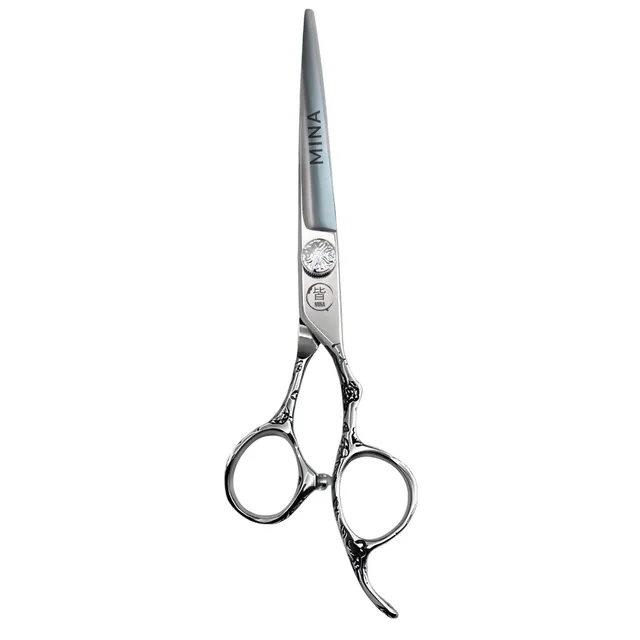
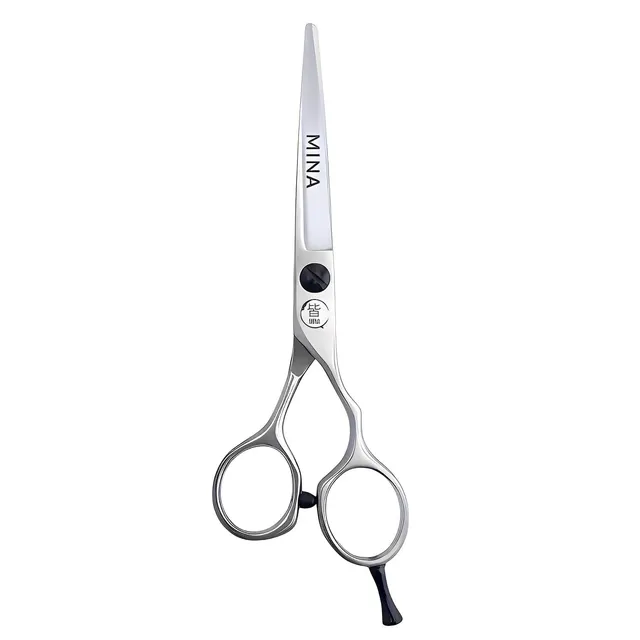
- Mina Shears: quality professionals can use at work, at an approachable price. From students and new stylists through to working hairdressers.
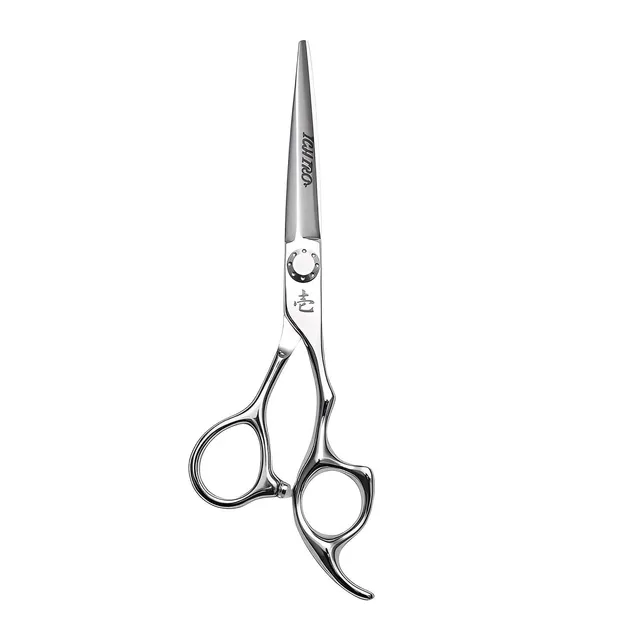
- Ichiro Shears: a line for everyday salon work.
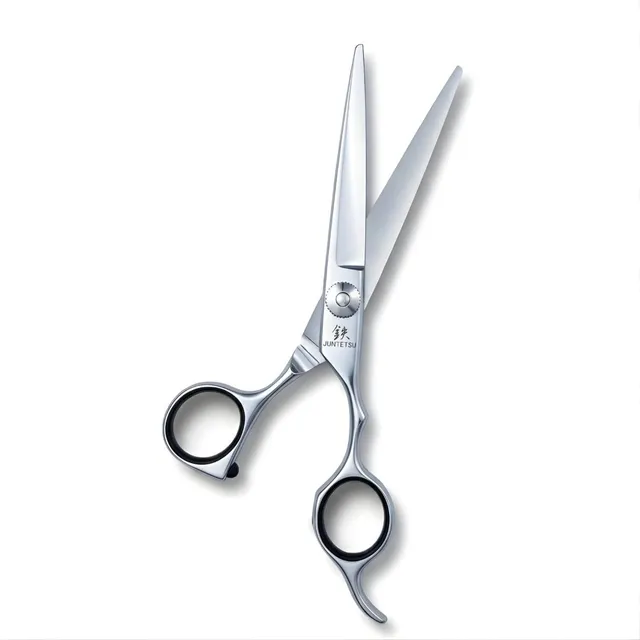
- Juntetsu Shears: a line built around higher-end models.
Even within one brand, the steel and finish differ by model. Don’t judge by brand alone: compare alongside the specifications on the product page. You can compare the price ranges and sizes of the three brands in “Mina, Ichiro and Juntetsu Compared”.
Corrosion resistance and care
Stainless steels resist rust, but that doesn’t mean they never rust. If water, colour, perm solution or styling product is left on them for a while, rust or dullness can appear.
- After use, wipe off clippings and water.
- Put one drop of oil on the pivot and open and close to work it in.
- Store them in a case, somewhere with little humidity.
How to care for your scissors is set out in “How to Care for Your Scissors”.
What matters as much as the steel
Even with the same steel, the feel in use changes with the blade edge, how the tension is set and daily care.
- Blade edge: convex or micro-serrated changes how the blade grips hair. See “Scissor Blade Types Explained”.
- Tension: too loose or too tight, and hair won’t cut cleanly. How to check it is covered in “How to Adjust Scissor Tension”.
- Resharpening: every steel needs resharpening to restore the edge. See “When to Get Your Scissors Sharpened”.
- Size and handle: scissors that don’t suit your hand are awkward to use, whatever the steel. See “How to Choose Your Scissor Size” as well.
Common misunderstandings about steel
Are harder scissors better?
Harder steels resist rounding at the edge, but tend to be less tough and harder to sharpen. If you choose on hardness alone, you may find yourself bothered by chipping or the work of resharpening. The basic approach is to choose a balance that suits how you work and your care habits.
Does a pattern change how they cut?
The pattern on layered steel comes from the way it is made, by layering steels with different properties. The pattern itself doesn’t decide how the scissors cut. Compare alongside the blade edge, the tension and the finish of the edge.
Does stainless steel mean no care is needed?
Stainless steels resist rust, but that doesn’t mean you can skip care. If water, chemicals or styling product are left on them, rust or dullness can appear. Wiping and oiling after use is just as necessary with every steel.
Resharpening and steel
How easy scissors are to resharpen changes with the steel. Steels made harder can take longer to resharpen, or need dedicated equipment. When you send scissors for sharpening, giving the brand and model name makes it easier to sharpen them to suit the steel and blade edge.
Summary
- Steel is judged by the balance of four qualities. Hardness, toughness, corrosion resistance and ease of sharpening.
- Steels made harder resist rounding at the edge, and tougher steels resist chipping and are easier to resharpen.
- We don’t show steel names or grades. Choose alongside the blade edge, handle and size, and ask us about the steel with the model name.
Compare each brand’s models on the “Mina Shears”, “Ichiro Shears” and “Juntetsu Shears” pages.