Care and sharpening
How to Care for Your Scissors
Scissor care comes down to three basics. Wipe them and oil the pivot after use, store them in a case, and check the tension. A few minutes of care each day means you notice early when the action gets heavier or the cut changes.
- Time needed
- A few minutes per pair
- How often
- Every time you use them
Key points
- After use, wipe off clippings and water, put one drop of oil on the pivot and open and close to work it in.
- Store them closed, in a case, somewhere with little humidity.
- Check the tension once or twice a week, and consider resharpening when you see signs such as hair escaping or uneven cut ends.
What you need
- A soft cloth
- Scissor oil, or camellia oil made for blades
- A scissor case, holster or pouch
Daily care
After each service, do these three things. It takes a few minutes per pair.
-
Wipe the blades
Use a soft cloth to wipe off clippings, water and styling products. Wipe from the heel of the blade towards the tip, keeping your fingers away from the edge.
-
One drop of oil on the pivot
Open the blades and put one drop of scissor oil around the pivot screw.
-
Open and close to work it in
Open and close a few times to spread the oil, then wipe off the excess.
Wipe the inner faces too
When you open the blades, you can see the inner faces where the two blades overlap. If styling product or fine clippings are left there, the action can become heavier and the condition of the edge can change more easily. Open the blades wide and wipe the inner faces too, from the heel towards the tip.
Caring for Thinning Scissors
Clippings easily get left between the teeth of Thinning Scissors. After wiping, brush between the teeth with a soft brush as well. If clippings stay packed between the teeth, the blades may not close fully and the amount they cut can vary.
After colour or perms
If colour, perm solution or styling product is left on the blades for a while, it can cause rust or dullness. After cutting hair with chemicals on it, wipe the blades promptly, even between services.
Choosing and applying oil
Choosing an oil
- Use scissor oil, or camellia oil made for blades.
- Avoid thick machine oil and cooking oil. Over time they harden and make the action heavy.
- Avoid strongly scented oils and oils with lots of additives, as they can get onto your client’s hair.
How to apply it
- Wipe the blades to remove clippings and water.
- Open the blades to about 90 degrees.
- Put one drop of oil around the pivot screw, where the two blades overlap.
- Open and close about ten times to work the oil deep into the pivot.
- Wipe off any oil that has run out with a cloth.
You don’t need much. One drop is enough. Too much oil attracts clippings and dust, and can get onto your client’s hair.
Storage
- When you have finished, close the blades and put the scissors in a case.
- Don’t leave them in humid places such as around the basin.
- Stored with other metal tools, the edge can knock against them and chip. Keep each pair in its own section of a case or pouch.
- If you won’t use them for a while, oil them, wipe the whole pair with a thin film and store them somewhere dry.
Cases, holsters and pouches compared
| Type | What it does | Suited to |
|---|---|---|
| Scissor case | Holds one or several pairs in a case with dividers | Storage, carrying |
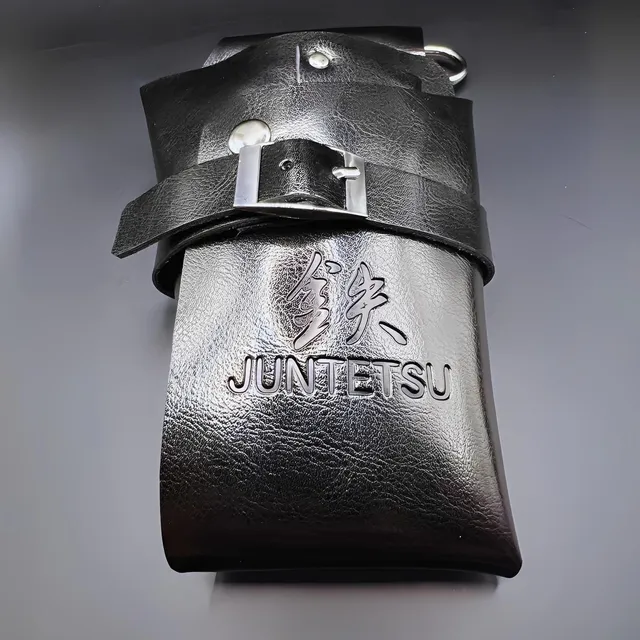
| Holster | Worn at the waist, so you can take scissors out and put them back while cutting | Working in the salon |
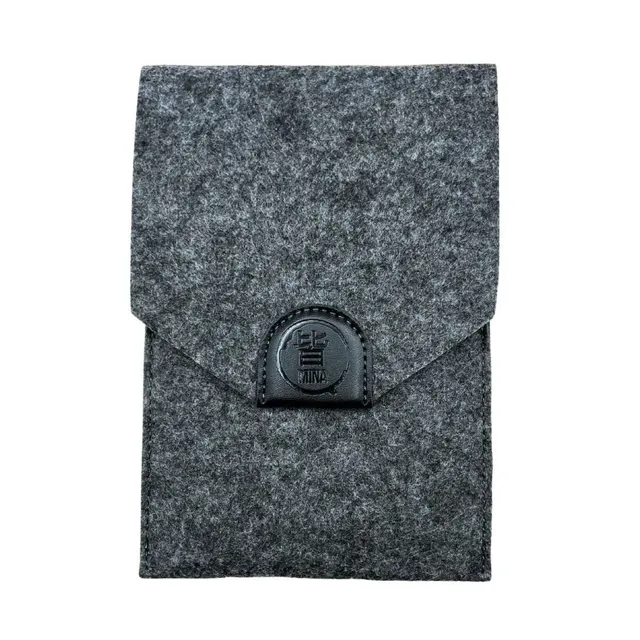
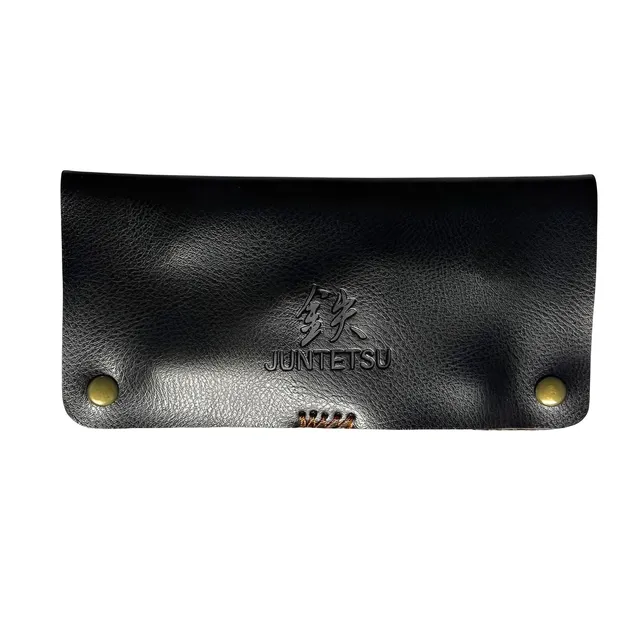
| Pouch or wallet | Folds up to carry several pairs together | Travel, work away, courses |
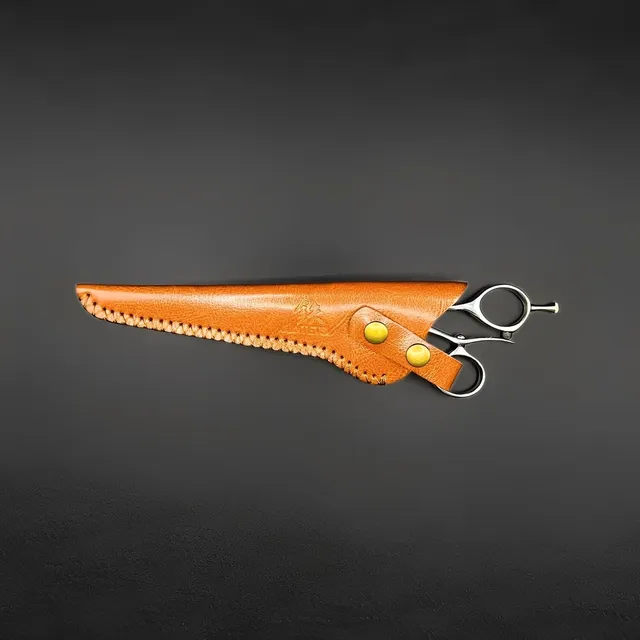
| Scissor cover | Covers the blades of one pair | Storing a spare pair |
Check that the blades are dry before putting them in a case or holster. Put away wet, they leave moisture trapped inside the case. How to choose by capacity and material is covered in “How to Choose a Scissor Case”.
Checking the tension
Tension is how tightly the two blades are held together. Check it once or twice a week like this.
- Hold the ring-finger-side handle and stand the scissors upright with the tip pointing up.
- Lift the thumb-side handle to open the blades wide.
- Let go of the thumb-side handle and watch the blades close.
If the blades don’t close fully and stop with the tip slightly open, that is a guide to standard tension.
- If they close all the way, the tension is loose. Hair tends to fold between the blades.
- If they barely move, the tension is tight. The action is heavy and the inner faces of the blades rub together.
Models with an adjustment screw can be adjusted with the tool or dial supplied. How to adjust is covered in detail in “How to Adjust Scissor Tension”. For models without an adjustment screw, ask a specialist sharpener.
When to resharpen
When you see signs like these, it is time to think about resharpening.
- Hair folds or escapes between the blades
- The cut ends are uneven
- Hair catches at the tip
- You need more force than usual to cut
How often scissors need resharpening depends on how much you use them and the hair you cut. Rather than going by a fixed period, test cut a dry, fine section once a month to check for the signs. Before sending them for sharpening, check the tension and that they are clean.
A convex edge must be sharpened while keeping the curve of the blade. Using a stone yourself can change the shape of the blade, so leave it to a specialist sharpener. How to recognise the signs and what happens when you send scissors for sharpening is covered in “When to Get Your Scissors Sharpened”.
Care habits in the salon
If a salon uses many pairs of scissors, setting up a system makes care easier to keep up.
- Keep the cloth for wiping after each service in a fixed place on the trolley
- Do the oiling all at once during care time after closing
- Open and close spare scissors once a month too, and oil them
What to avoid
- Cutting anything other than hair, such as paper, plastic or tape
- Carrying on using scissors you have dropped without checking them
- Putting them away wet after rinsing
- Leaving them wiped with alcohol or other strong cleaners (if you use one, wipe off the moisture and oil them)
- Putting them down on the workstation with the blades open
- Pushing them into a trolley or pocket tip first
- Using a sharpening stone yourself, or taking out the screw to dismantle them
If you drop your scissors
If you drop your scissors, check these points before using them.
- Look in good light for chips at the edge
- Check that the two tips line up when the blades are closed
- Check for catching or unusual noises when opening and closing
- Test cut a fine section and check they cut right to the tip
If anything at all concerns you, don’t carry on using them: send them for a check-up. Using scissors with a bent blade can make the tips knock together and spread the chip.
Care at a glance
- Every time you use them
- Wipe clean, one drop of oil on the pivot
- After cutting hair with colour or chemicals on it
- Wipe promptly, even between services
- Once or twice a week
- Check the tension, clean between the teeth, wipe the inner faces of the blades
- Once a month
- Check them over, and test cut to check the condition of the edge
- When you notice the signs
- Resharpening or a check-up
Seasonal points
- Humid months: in the humid months and in summer, moisture builds up more easily inside the case. Wipe and oil more carefully than usual, and keep the case dry too.
- Dry months: in winter, static makes hair fly away more and fine clippings stick to the blades more easily. Wipe the inner faces often.
- Heating and direct sunlight: don’t leave scissors near a heating vent or on a sunny windowsill.
Summary
- Every time you use them, wipe them and put one drop of oil on the pivot, then store them closed in a case.
- Check the tension once or twice a week, and test cut once a month to check the edge.
- If you drop them, or see signs such as hair escaping, send them for a check-up or resharpening.
Scissor cases and holsters are listed under “Cases and accessories”.