Choosing scissors
How to Choose Your Scissor Size
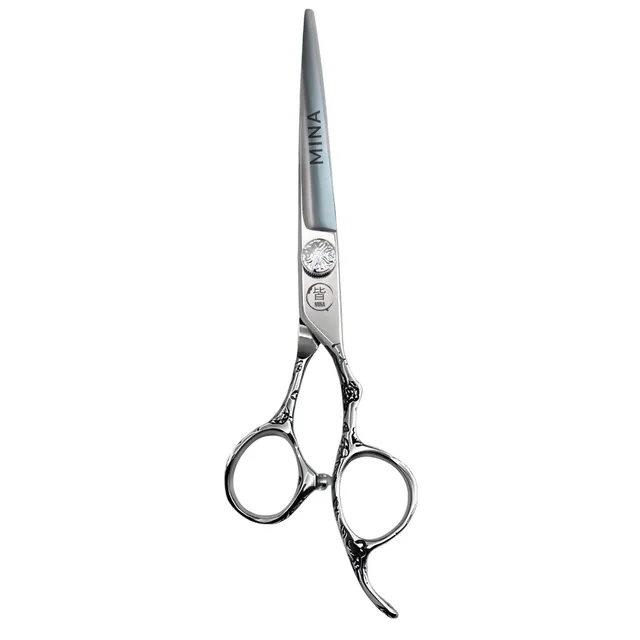
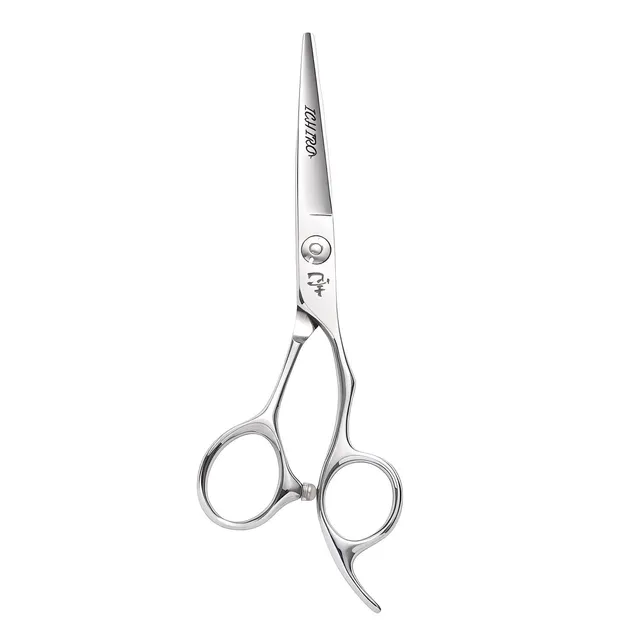
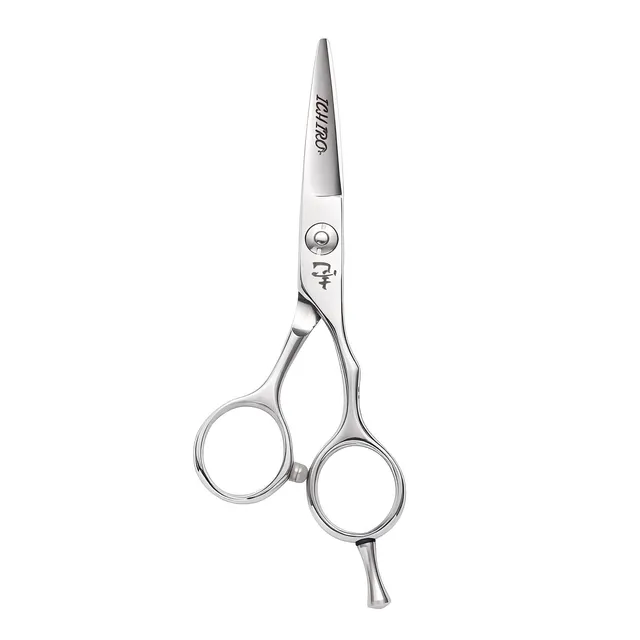
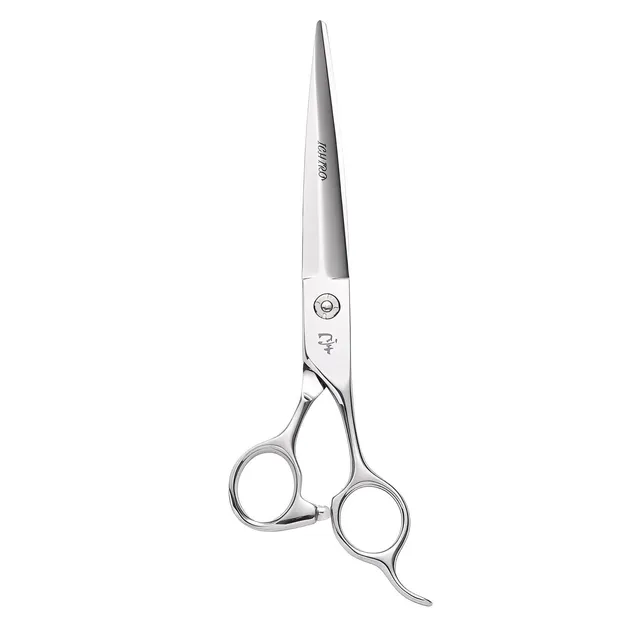
Scissor size is the length in inches from the blade tip to the end of the longest handle (not counting the finger rest). Lay the closed scissors on your palm. If the blade is roughly the same length as your middle finger, the size is a good starting point for your hand.
Key points
- Size is the length in inches from the blade tip to the end of the longest handle, and one inch is about 2.54 cm.
- Laying the scissors on your palm and comparing the blade with your middle finger gives you a starting point for a size that suits your hand.
- Shorter lengths are easier for detailed work and dry cutting, longer ones for blunt cutting and short back and sides.
Size at a glance
| Type of cutting | Suggested length |
|---|---|
| Detailed work, dry cutting | 5.0 to 5.5 inch |
| General salon work | 5.5 to 6.0 inch |
| Blunt cutting, long hair | 6.0 to 6.5 inch |
| Short back and sides, scissor over comb | 6.5 to 7.0 inch |
A starting range, not a rule. The length that feels easiest to handle changes with hand size and how deep the thumb sits.
How size is stated
Scissor size is given in inches. The stated size is the straight-line length from the blade tip to the end of the longest handle. The finger rest beside the ring-finger hole is not included.
One inch is about 2.54 cm. Here are the sizes you will see most often, converted to centimetres.
| Stated size | Centimetres (approx.) |
|---|---|
| 4.5 inch | 11.4 cm |
| 5.0 inch | 12.7 cm |
| 5.25 inch | 13.3 cm |
| 5.5 inch | 14.0 cm |
| 5.75 inch | 14.6 cm |
| 6.0 inch | 15.2 cm |
| 6.25 inch | 15.9 cm |
| 6.5 inch | 16.5 cm |
| 6.75 inch | 17.1 cm |
| 7.0 inch | 17.8 cm |
The same size can have a different blade length
Even at 5.5 inch, the ratio of blade length to handle length varies a little from model to model. A design with a longer blade cuts a wider section in one go at the same stated size. A design with longer handles has a shorter blade, which makes small movements of the tip easier.
On offset and crane handles, the thumb-side and ring-finger-side handles (shanks) are different lengths, so measure to the end of the longer one.
Length and balance
Even at the same size, the weight and balance in the hand change with the thickness of the blades and the way the handles are made. A model that feels heavier towards the tip tends to hold the tip position steadily, but can feel heavy for small, quick opening and closing. Once you have chosen a size, check the blade and handle shape in the specifications and photos on the product page.
Measure the scissors you use now
When replacing a pair or choosing a second one, measure the scissors you use now, as it gives you a reliable reference.
- Close the scissors and lay them on a flat table.
- Put a ruler against the blade tip and measure to the end of the longest handle.
- Divide the length in centimetres by 2.54 to get the approximate size in inches.
For example, 15.2 cm is about 6.0 inch.
Measuring against your hand
If you can’t hold the scissors in person, use this method to find a starting size for your hand.
- Turn your palm upwards.
- Lay the closed scissors on your palm with the tip towards your fingertips.
- Compare the blade (from the tip to the pivot screw) with the length of your middle finger.
- Check that the end of the handle sits around the base of your palm.
If the blade is roughly the same length as your middle finger, the size is a good starting point for your hand. If the blade is much longer than your middle finger, it is harder to place the tip precisely. If it is too short, each cut covers a narrower section.
| Hand size | Size to start with |
|---|---|
| Small | 5.0 to 5.5 inch |
| Average | 5.5 to 6.0 inch |
| Large | 6.0 inch |
This table is a starting point. Even with the same size of hand, the length that feels right changes with the cutting you do most and how far you put your thumb into the ring.
Choosing by the cutting you do
The cutting you do most also changes which length is easiest to work with.
| Type of cutting | Suggested length | What to look for |
|---|---|---|
| Detailed work, dry cutting | 5.0 to 5.5 inch | A length that makes it easy to control the tip |
| General salon work | 5.5 to 6.0 inch | A length that works well for both wet and dry cutting |
| Blunt cutting, long hair | 6.0 to 6.5 inch | Cuts a wide section level in one go |
| Short back and sides, scissor over comb | 6.5 to 7.0 inch | Travels a long way along the comb |
The difference between dry and wet cutting is also covered in “Scissors for Dry Cutting and Wet Cutting”.
Starting points for hairdressers, barbers and students
Hairdressers
For one pair to cover general salon work, 5.5 to 6.0 inch is the standard. If you do a lot of detailed work such as short cuts and bobs, lean towards 5.5 inch. If you do a lot of base cutting on long hair, lean towards 6.0 inch.
Barbers
For short back and sides and scissor over comb, you cut a long distance along the comb, so longer scissors of 6.5 to 7.0 inch are common. Some barbers also carry a second pair of 5.5 to 6.0 inch for finishing details. How to choose for barbering is covered in “How to Choose Barber Scissors”.
Hairdressing students and new stylists
Training covers everything from base cuts on a mannequin head to dry cutting, so start from 5.5 to 6.0 inch. If you have smaller hands, compare from 5.0 to 5.5 inch. How students and new stylists can choose is covered in “Scissors for Hairdressing Students and New Stylists”.
Choosing a second pair
If your first pair is 5.5 to 6.0 inch, giving the second pair a different job makes it clear which one to reach for.
- Add a shorter 5.0 to 5.5 inch pair for finishing details
- Add a longer pair of 6.5 inch or more for blunt cutting and short back and sides
- Add Thinning Scissors for removing weight
Choosing Thinning Scissors the same size as your Cutting Scissors, or slightly shorter, makes switching between them feel more natural. How to choose Thinning Scissors is covered in “How to Choose Thinning Scissors”.
If you match the handle shape as well as the size, you won’t need to change your hold when you switch. The differences between handles are covered in “Scissor Handle Types Explained”.
For left-handed stylists
If you are left-handed, choose a model with the blades and handles built for the left hand. Size is stated and measured in the same way as for right-handed scissors. Left-handed versions of some models come in fewer sizes than right-handed ones, so check the size options on the product page.
How to choose is covered in “Scissors for Left-Handed Hairdressers”, and left-handed models are listed under “Left-handed models”.
Switching between scissors of different lengths
When you switch between scissors of different lengths, such as 5.5 inch and 6.5 inch, your sense of where the tip is changes. With longer scissors the tip is further away than you expect, so take care with its position around the nape and ears and in other detailed areas.
If you switch often, keeping the handle shape and the way you insert your thumb the same lets you hold every pair in the same way, even when the lengths differ.
Summary
- Size is the length in inches from the blade tip to the end of the longest handle, and one inch is about 2.54 cm.
- If the blade is roughly the same length as your middle finger, the size is a good starting point for your hand.
- The standard is 5.5 to 6.0 inch for hairdressers, 6.5 to 7.0 inch for barbers and 5.5 to 6.0 inch for students.
To browse by size, filter the “Cutting Scissors” list by size.
Before you choose
- When replacing a pair or choosing a second one, measure the scissors you use now, as it gives you a reliable reference.
- Compare the blade (from the tip to the pivot screw) with the length of your middle finger.
- Check that the end of the handle sits around the base of your palm.
- Once you have chosen a size, check the blade and handle shape in the specifications and photos on the product page.
- Left-handed versions of some models come in fewer sizes than right-handed ones, so check the size options on the product page.
Questions and answers
Torn between 5.5 and 6.0 inch?
If you do a lot of detailed work or dry cutting, choose 5.5 inch. If most of your work is base cutting or long hair, choose 6.0 inch. If you already have a pair, it is easier to decide by asking whether its length causes you any problems, such as the tip not reaching or detailed work feeling awkward.
Can I move up to longer scissors once I'm more experienced?
Longer scissors cut a wider section in one go, so placing the tip accurately takes some getting used to. Rather than choosing a longer pair in order to improve, the basic approach is to learn the correct hold first with a length that suits your hand.
What if the size doesn't suit me?
If you are unsure between two sizes, ask us before you order and we will help you compare them. For what applies to your order, see the trade terms or contact us.