Choosing scissors
Scissor Blade Types Explained
A scissor's blade type (its edge) is the shape of the edge when you look at the blade in cross-section. There are four main types, convex (clamshell), semi-convex, bevel and micro-serrated, and the shape changes how the blade grips hair and which cutting it suits.
Key points
- A convex edge is finished as a smooth curve at the tip and can also be used for slide cutting.
- Bevel and semi-convex edges have an angled face at the edge, which helps the edge keep its shape.
- A micro-serrated edge has fine serrations that stop hair slipping away, and is used for dry cutting.
What blade edge means
If you look at a cross-section of a scissor blade, the way it narrows towards the edge differs from model to model. This shape is called the blade type, or the edge.
The edge affects three things.
- How it grips hair: how firmly the edge catches the hair, which decides whether slippery hair escapes.
- Which techniques you can use: whether you can slide cut, gliding the blades without closing them fully.
- Resharpening: what skill it takes to sharpen the blade while keeping its original shape.
The four main edges are:
- Convex (clamshell)
- Semi-convex
- Bevel
- Micro-serrated
Convex (clamshell)
The blade is ground in a smooth curve towards the edge. It is also called a clamshell edge, because the cross-section looks like the shell of a clam.
- The edge is thin, and the face that meets the hair is smooth.
- It works for both wet and dry cutting.
- It can also be used for slide cutting, gliding over the hair without closing the blades fully.
- It cuts without crushing the hair, so the cut ends look smooth.
Because the edge is thin, it can chip if it hits something hard. Take care: don’t cut anything other than hair, and don’t drop the scissors.
Resharpening needs the skill to sharpen while keeping the curve of the blade. Most of the Cutting Scissors Scissor Lab carries have a convex edge.
Semi-convex
An edge halfway between convex and bevel. A small angle is added near the edge of the curve, which helps the edge keep its shape.
- It has a smoothness close to convex.
- The edge angle is clearly defined, so it is easier to return to its original shape when resharpened.
- It is also used on models for students and first pairs.
Bevel
An edge with a flat, angled face (the bevel) at the edge.
- The edge angle is wide, so it is less likely to chip.
- It grips hair firmly, so it is used for blunt cutting and short back and sides.
- Because the edge is thicker, it is not suited to slide cutting.
- The face at the edge is flat, so the original angle is easy to restore when resharpened.
Some bevel edges are combined with micro-serrations.
Micro-serrated
The edge has serrations so fine they are hard to see with the naked eye. Some have them on one blade only, some on both.
- The fine serrations grip the hair, so it is less likely to slip away as the blades close.
- It is used for dry cutting and for cutting slippery hair.
- It makes it easier to keep the ends level when practising blunt cutting.
- The serrations catch on the hair, so it is not suited to slide cutting.
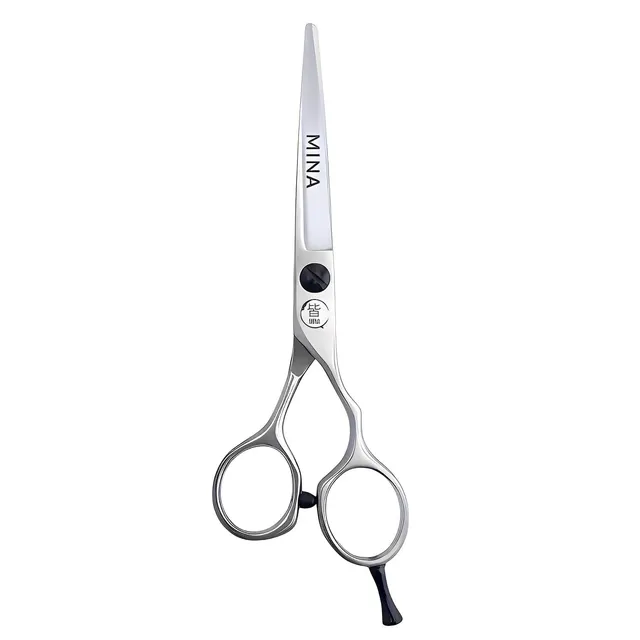
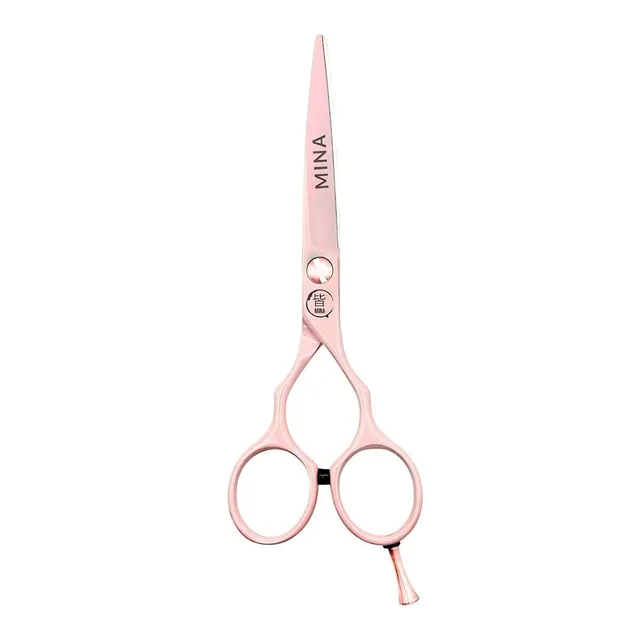
Micro-serrations are also often used on the smooth blade of Thinning Scissors. Among the models we carry, the Mina Classic II Cutting Scissors and the Mina Classic Pastel Pink Cutting Scissors are micro-serrated. On the Ichiro Ergo Apprentice Cutting Scissors, the 6.0 inch is micro-serrated.
Which edge suits which technique
| Technique | Convex | Semi-convex | Bevel | Micro-serrated |
|---|---|---|---|---|
| Blunt cutting | Works | Works | Well suited | Well suited |
| Slide cutting | Well suited | Partly | Not suited | Not suited |
| Point cutting | Works | Works | Works | Works |
| Dry cutting | Works | Works | Works | Well suited |
| Short back and sides, scissor over comb | Works | Works | Well suited | Works |
If you slide cut
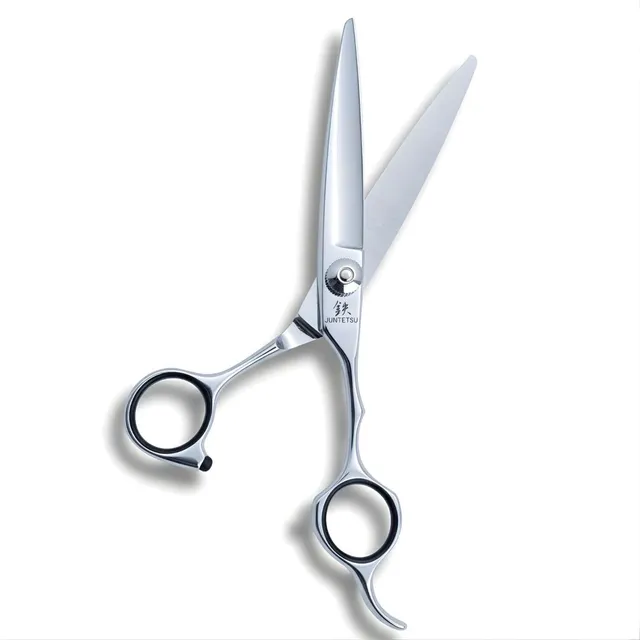
In slide cutting, you glide the slightly open blades over the hair, taking out bulk towards the ends. The edge must not catch on the hair, so choose a smooth convex edge. Models designed with slide cutting in mind are called slide scissors. Among the models we carry, there are the Juntetsu Cobalt Vertex Slide Scissors.
If you do a lot of dry cutting
Dry hair slips easily on the blade, and the condition of the edge shows more in the finish. A convex edge will cut it, but if you find slippery hair escaping, compare micro-serrated models. See “Scissors for Dry Cutting and Wet Cutting” for more.
Edges and resharpening
The edge also decides how the blade should be resharpened.
- Convex: needs dedicated skill and equipment to keep the curve. Using a flat stone changes the shape of the edge.
- Semi-convex and bevel: sharpened while keeping the edge angle. The original angle is easy to restore.
- Micro-serrated: must be sharpened so that the fine serrations remain. Depending on the method, the serrations can disappear and leave a smooth edge.
When you send scissors for sharpening, giving the brand and model name helps the sharpener match the edge. The signs that resharpening is due, and how to ask for it, are covered in “When to Get Your Scissors Sharpened”.
Side by side
| Edge | Shape at the edge | Suited to | Slide cutting | Resharpening |
|---|---|---|---|---|
| Convex | Smooth curve | All wet and dry work | Yes | Needs skill to keep the curve |
| Semi-convex | Curve with a small angle | General salon work | Partly | Easy to return to its shape |
| Bevel | Flat, angled face | Blunt cutting, short back and sides | Not suited | Original angle easy to restore |
| Micro-serrated | Fine serrations | Dry cutting, slippery hair | Not suited | Must keep the serrations |
The edge of each model is listed under “Edge” in the “Specifications” on its product page. The differences in steel are covered in “Understanding Scissor Steel”.
How to tell the edges apart
The edge can be hard to tell by looking alone. To check, use these methods.
- Check the product page specifications: we list the edge of each model under “Edge” in the “Specifications”.
- Check the instructions or the box: it may be printed in the maker’s instructions or on the box.
- Ask the shop you bought from: give the model name and ask.
Don’t run a finger along the edge to check: it is dangerous. The serrations of a micro-serrated edge are so fine they are hard to see with the naked eye.
Hair type and edge
Hair type also changes which edge to choose.
| Hair type | What tends to happen | Edges that suit it |
|---|---|---|
| Fine, soft hair | Slips on the blade and escapes at the tip | Micro-serrated, or a convex edge in good condition |
| Thick, coarse hair | Pushes the blades apart | Convex, bevel |
| Dense hair | Each cut takes a large amount | Convex (combined with Thinning Scissors) |
If one pair has to handle every hair type, start from a convex edge and adjust with the tension and the size of the sections you take.
Summary
- The edge affects how the blade grips hair, which techniques you can use and how it is resharpened.
- A convex edge suits all-round salon work including slide cutting, and a micro-serrated edge suits dry cutting and slippery hair.
- Keeping the original edge is what matters in resharpening, so give the brand and model name and leave it to a specialist sharpener.
Models for slide cutting are listed under “Slide scissors”, and all Cutting Scissors under “Cutting Scissors”.
The models in this guide
| Model | Sizes | Handle | Edge | Hand | Price (tax-free) |
|---|---|---|---|---|---|
| Juntetsu Cobalt Vertex Slide Scissors | 5.5–6.5″ | Offset | Convex | Right-handed | ¥39,636 |
| Mina Classic II Cutting Scissors | 5.0–6.0″ | Semi-offset | Micro-serrated | Right-handed | ¥11,364 |
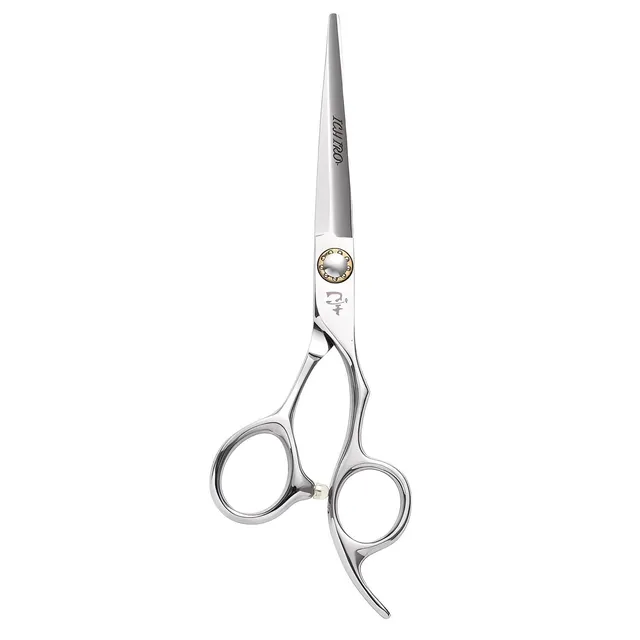
| Ichiro Offset Cutting Scissors | 5.0–7.0″ | Offset | Convex | Right-handed | ¥22,909 |
| Mina Classic Pastel Pink Cutting Scissors | 5.5″ | Classic (even) | Micro-serrated | Right-handed | ¥13,091 |