By purpose
Scissors for Hairdressing Students and New Stylists
For a hairdressing student's or new stylist's first pair, put a size that suits your hand (5.5 to 6.0 inch as a guide) and a handle shape that is easy for you to hold first. Decide on your Cutting Scissors first, then match your Thinning Scissors to the same handle shape so switching between them is smooth.
Key points
- Choose your first pair on four points. Size, handle shape, blade edge and budget.
- For training, 5.5 to 6.0 inch is the guide, and if you have smaller hands, compare from 5.0 to 5.5 inch.
- If your school specifies scissors, follow that, and if not, match your Cutting and Thinning Scissors to the same handle shape.
Four things to look at for your first pair
When choosing professional scissors for the first time, decide these four points in order before comparing lots of models.
- Size: is the length right for your hand?
- Handle shape: does the shape suit the hold you are taught in class?
- Blade edge: does it suit the cutting you practise?
- Budget: can you get both Cutting and Thinning Scissors?
Choose the colour and design once these four are decided. In training you hold scissors for long hours every day, so scissors that suit your hand are the foundation.
A size that suits training
Scissor size is the length in inches from the blade tip to the end of the longest handle (not counting the finger rest).
Measuring against your hand
- Turn your palm upwards.
- Lay the closed scissors on your palm with the tip towards your fingertips.
- Compare the blade (from the tip to the pivot screw) with the length of your middle finger.
If the blade is roughly the same length as your middle finger, the size is a good starting point for your hand. If you can’t hold the scissors in person, getting a feel for length with a family member’s or friend’s scissors, or a pair borrowed at school, makes comparing easier.
Starting points for students and new stylists
| Hand size | Suggested length |
|---|---|
| Small | 5.0 to 5.5 inch |
| Average | 5.5 to 6.0 inch |
| Large | Around 6.0 inch |
Training in class and in the salon is mostly cutting on mannequin heads, covering everything from base cuts to dry cutting. Starting from 5.5 to 6.0 inch, which works for every kind of practice, also makes it easier to think about a second pair later. How to think about size is set out in detail in “How to Choose Your Scissor Size”.
Handle shape
There are three main handle shapes.
- Classic (symmetrical) handle: the thumb-side and ring-finger-side handles are almost the same length. It is often used in hairdressing schools when learning the basic hold.
- Offset handle: the thumb-side handle (shank) is shorter than the ring-finger side. Most professional scissors used in salons have this shape.
- Crane handle: an offset handle with the ring-finger-side handle angled downwards.
If you are being taught the classic hold at school, starting with a classic handle lets you practise with the same hold as in class. If nothing is specified, starting from an offset handle, which is easy to keep using once you are working in a salon, makes switching scissors feel more natural. The differences are covered in “Scissor Handle Types Explained”.
Blade edge
Models for students and new stylists mainly use these two blade edges.
- Convex edge: the edge is finished as a smooth curve. It works for both wet and dry cutting, and for practising slide cutting.
- Micro-serrated edge: the edge has fine serrations. Hair is less likely to slip along the blade, so it makes it easier to keep the ends level when practising blunt cutting. It is not suited to slide cutting.
Neither is better: choose for the cutting you practise. If you can’t decide, a convex edge, which covers more situations, is the easier starting point.
Getting Cutting and Thinning Scissors together
Training in class and in the salon uses both Cutting Scissors and Thinning Scissors. When you get both, matching these points makes switching between them smoother.
- Handle shape: if your Cutting Scissors are offset, choose offset Thinning Scissors too.
- Size: choose Thinning Scissors the same size as your Cutting Scissors, or slightly shorter.
- Brand: the same brand and series feel closer in the hand.
For Thinning Scissors, a standard model with around 30 teeth is a good guide, as it works for both removing weight and finishing. If you want Cutting and Thinning Scissors from the same model from the start, see the scissor sets and “How to Choose a Scissor Set” as well. How to choose Thinning Scissors is covered in “How to Choose Thinning Scissors”, and how to use the two pairs in “Cutting Scissors vs Thinning Scissors”.
How to think about budget
Plan your first budget for two pairs, Cutting Scissors and Thinning Scissors, and you won’t be caught out later.
- Spend first on your Cutting Scissors: they are the pair you hold for long hours in training. Put a size and handle shape that suit your hand first.
- Start with a standard pair of Thinning Scissors: a model with around 30 teeth is plenty to train with at first.
- Allow for care products and resharpening: plan for oil and a cloth, a case, and the cost of resharpening as the edge needs it.
Among the brands Scissor Lab carries, Mina Shears is the line built on “quality professionals can use at work, at an approachable price”, in a price range that is an easy choice for students and new stylists. Ichiro Shears is the line for everyday salon work. You can check the price of each model in the comparison table further down this page and on the product pages.
Models for students and new stylists
Here are models that are easy choices for students and new stylists.
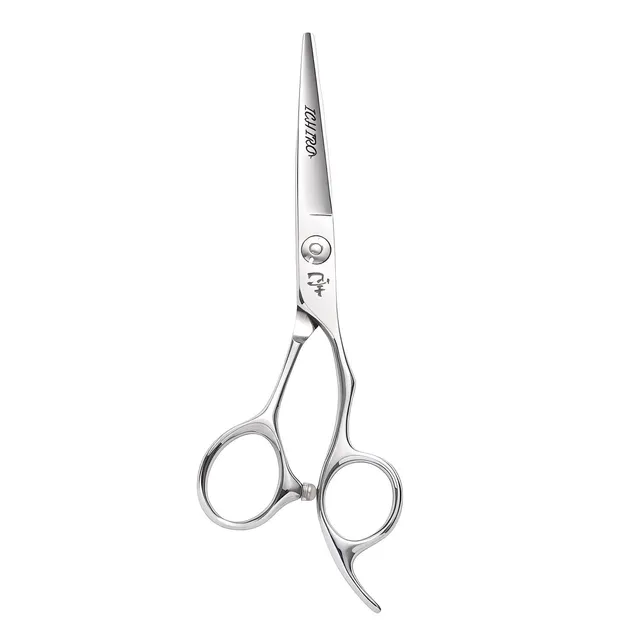
- Ichiro Ergo Apprentice Cutting Scissors: 5.5 inch (convex) and 6.0 inch (micro-serrated), offset handle.
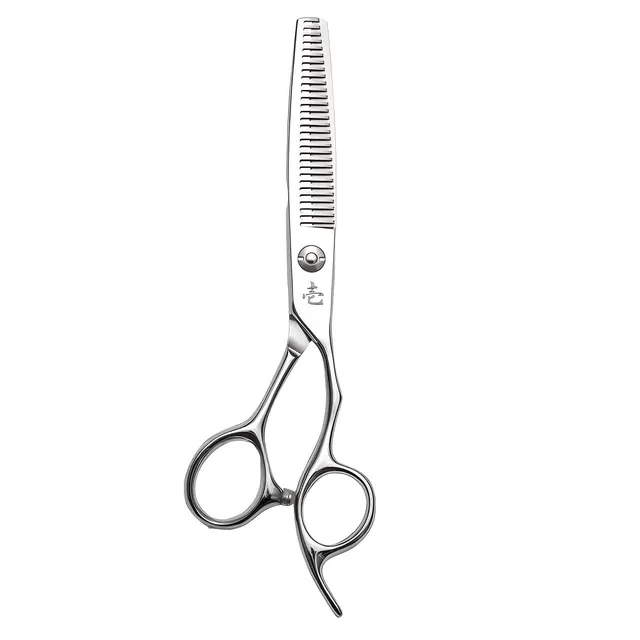
- Ichiro Ergo Apprentice Thinning Scissors: 6.0 inch, 30 teeth, offset handle. They match the Cutting Scissors above.
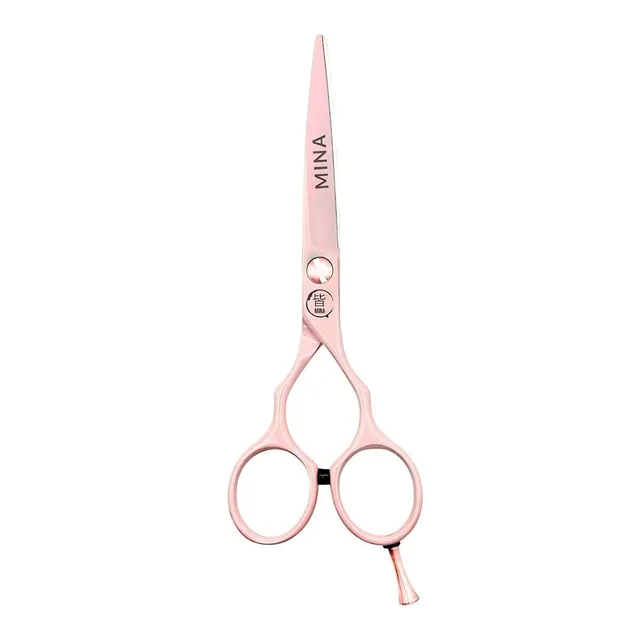
- Mina Classic Pastel Pink Cutting Scissors: 5.5 inch, classic handle and micro-serrated edge.
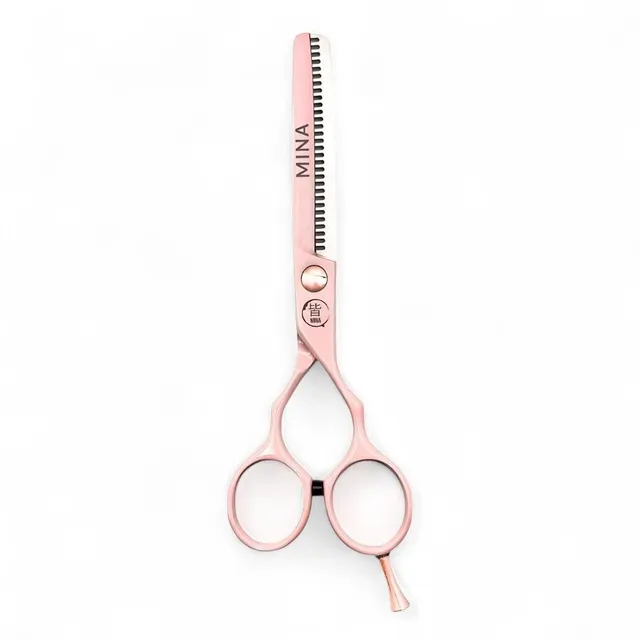
- Mina Classic Pastel Pink Thinning Scissors: 5.5 inch, 30 teeth, classic handle.
- Mina Sakura II Cutting Scissors: 5.0 to 7.0 inch, offset handle and convex edge. A model where it is easy to choose a size that suits your hand.
- Ichiro Ichiko Precision Cutting Scissors: 4.5 and 5.0 inch. For anyone with smaller hands, or looking for short scissors for detailed work.
To get Cutting and Thinning Scissors together, there is also the Mina Classic II 2-Piece Scissor Set.
Care for beginners
How professional scissors feel in use changes with daily care. After training, make these three things a habit.
- Wipe the blades: use a soft cloth to wipe off clippings and water. Wipe from the heel towards the tip, keeping your fingers away from the edge.
- One drop of oil on the pivot: open the blades and put one drop of scissor oil around the pivot screw.
- Put them away in a case: close the blades, put them in a case and store them somewhere with little humidity.
Even practising on mannequin heads leaves clippings and water on the blades. If you drop them on the floor, check the edge and tension before using them. See “How to Care for Your Scissors” for more.
If your school specifies scissors
Some hairdressing schools specify the scissors used in class. If yours does, follow that first. It is perfectly reasonable to learn the basics with the specified model, then look for a pair that suits your own hand when you start working in a salon.
If you are left-handed, it is worth checking with your school whether you may use left-handed scissors. How to choose left-handed scissors is covered in “Scissors for Left-Handed Hairdressers”.
For orders from hairdressing schools and colleges for a whole class or year group, contact us through the wholesale page.
What to review once you are working in a salon
Once you start working in a salon, what makes scissors easy to use can change with the cutting you do and your clients’ hair. When you notice changes like these, it is time to think about a second pair.
- More dry cutting and finishing details: add a shorter 5.0 to 5.5 inch pair
- Many clients with long hair: add a longer 6.0 to 6.5 inch pair
- Many clients with dense hair: add Thinning Scissors with fewer teeth that take more hair in each cut
If you keep your first pair for training and give the second pair its own role, each pair’s strengths come through.
Summary
- Decide your first pair in the order size, handle shape, blade edge, budget.
- For training, 5.5 to 6.0 inch is the guide, and your Cutting and Thinning Scissors should have matching handle shapes.
- Make daily wiping and oiling, and storing them in a case, a habit.
Models for students and new stylists are listed under “For students and new stylists”.
The models in this guide
| Model | Sizes | Handle | Edge | Hand | Price (tax-free) |
|---|---|---|---|---|---|
| Ichiro Ergo Apprentice Cutting Scissors | 5.5 / 6.0″ | Offset | – | Right-handed | ¥19,727 |
| Ichiro Ergo Apprentice Thinning Scissors | 6.0″ | Offset | Convex, 30 Teeth | Right-handed | ¥19,727 |
| Mina Classic Pastel Pink Cutting Scissors | 5.5″ | Classic (even) | Micro-serrated | Right-handed | ¥13,091 |
| Mina Classic Pastel Pink Thinning Scissors | 5.5″ | Classic (even) | 30 Teeth | Right-handed | ¥13,091 |
| Mina Sakura II Cutting Scissors | 5.0–7.0″ | Offset | Convex | Right-handed | ¥13,091 |
| Mina Sakura II Thinning Scissors | 6.0″ | Offset | 30 Teeth | Right-handed | ¥13,091 |
| Ichiro Ichiko Precision Cutting Scissors | 4.5 / 5.0″ | Offset | Convex | Right-handed | ¥24,545 |