Choosing scissors
How to Choose Cutting Scissors
Cutting Scissors are easier to choose if you decide in this order. Size, then handle, then blade edge, then budget. This guide sets out that order, with suggestions by use from the models Scissor Lab carries.
Key points
- First decide the size from your hand and the cutting you do most, then choose a handle shape that suits your hold.
- A convex edge is the standard, and for dry cutting or slippery hair a micro-serrated edge is another option.
- Choose a first pair in a length that covers all-round salon work, and give a second pair its own role, such as shorter, longer or thinning.
The order for choosing Cutting Scissors
Cutting Scissors have two smooth blades. When they close, all the hair between the blades is cut, so they are used to set length and outlines. They are the first pair you get for the salon, and a tool you hold for long hours every day.
They are easier to choose if you decide in this order.
- Size: decide the length from your hand size and the cutting you do most.
- Handle: choose the handle shape to suit the way you normally hold scissors and insert your thumb.
- Blade edge: start from a convex edge and choose for the cutting you do.
- Budget and brand: compare price ranges and specifications among models of the same size and shape.
Choose the design and colour last. If the size and handle don’t suit you, even a colour you love won’t suit your hand, and you are likely to end up replacing them.
Size: your hand and the cutting you do
Scissor size is the length in inches from the blade tip to the end of the longest handle (not counting the finger rest). One inch is about 2.54 cm.
To check whether a size suits your hand, lay the closed scissors on your palm. If the blade (from the tip to the pivot screw) is roughly the same length as your middle finger, the size is a good starting point for your hand.
| Cutting you do most | Suggested length |
|---|---|
| Detailed work, dry cutting | 5.0 to 5.5 inch |
| General salon work | 5.5 to 6.0 inch |
| Blunt cutting, long hair | 6.0 to 6.5 inch |
| Short back and sides, scissor over comb | 6.5 to 7.0 inch |
How to measure and how to think about size are covered in detail in “How to Choose Your Scissor Size”.
Handle: offset, classic and crane
The handle shape is defined by the length and angle of the thumb-side and ring-finger-side handles (shanks).
- Offset handle: the thumb-side handle (shank) is shorter than the ring-finger side. Most professional Cutting Scissors today use it.
- Classic (opposing) handle: the thumb-side and ring-finger-side handles are almost the same length. It is often used in hairdressing schools when learning the basic hold.
- Crane handle: an offset handle with the ring-finger-side handle angled downwards.
There is also the swivel thumb, whose thumb ring rotates. The angle of the ring changes to follow the direction of your thumb.
If you can’t decide, start from an offset handle, then compare classic and crane handles against the way you normally hold scissors. The differences are set out in “Scissor Handle Types Explained”.
Blade edge: convex and micro-serrated
The blade edge is the shape of the edge when you look at the blade in cross-section.
- Convex edge (clamshell): the edge is finished as a smooth curve. It works for both wet and dry cutting, and for slide cutting, gliding the blades without closing them fully.
- Micro-serrated edge: the edge has fine serrations. Hair is less likely to slip along the blade, so it is used for dry cutting and slippery hair. It is not suited to slide cutting.
- Bevel edge: the edge has a flat, angled face. It grips hair firmly.
- Semi-convex edge: an edge halfway between convex and bevel.
Most of the Cutting Scissors Scissor Lab carries have a convex edge, with some micro-serrated models too. See “Scissor Blade Types Explained” for details.
Steel and price range
The price of Cutting Scissors varies with the steel, blade finish, handle construction, size range and more. A more expensive model is not automatically better: the basic approach is to choose for how you work and how often you resharpen.
The three brands Scissor Lab carries sit in different price ranges and positions.
| Brand | Positioning | For |
|---|---|---|
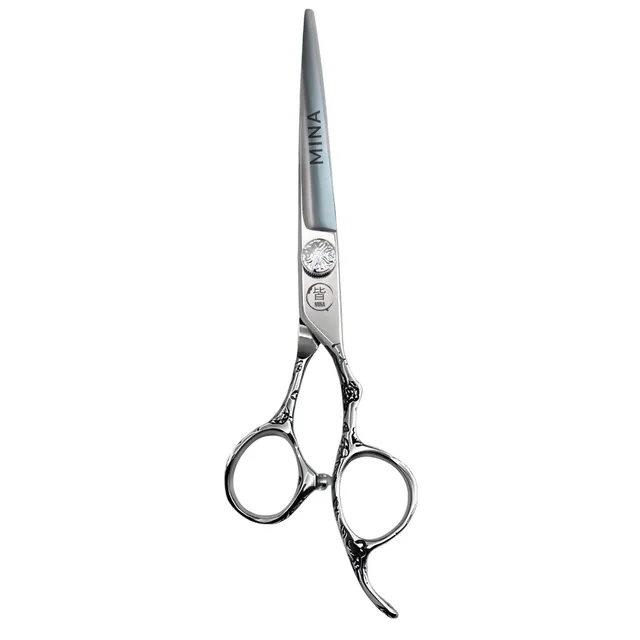
| Mina Shears | Quality professionals can use at work, at an approachable price | Hairdressing students and new stylists, anyone looking for a second or spare pair |
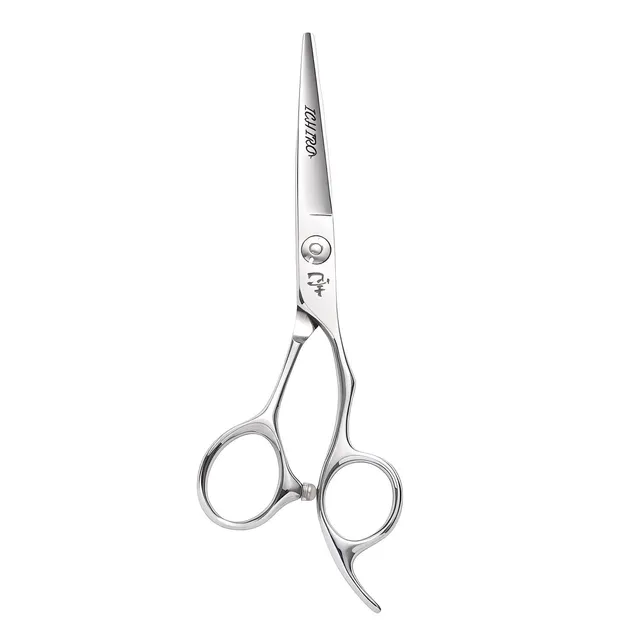
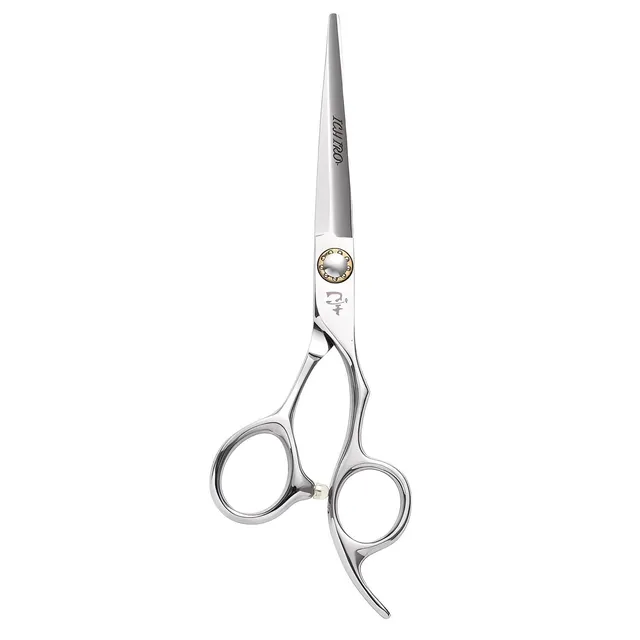
| Ichiro Shears | A line for everyday salon work | Anyone looking for one pair for everyday salon work |
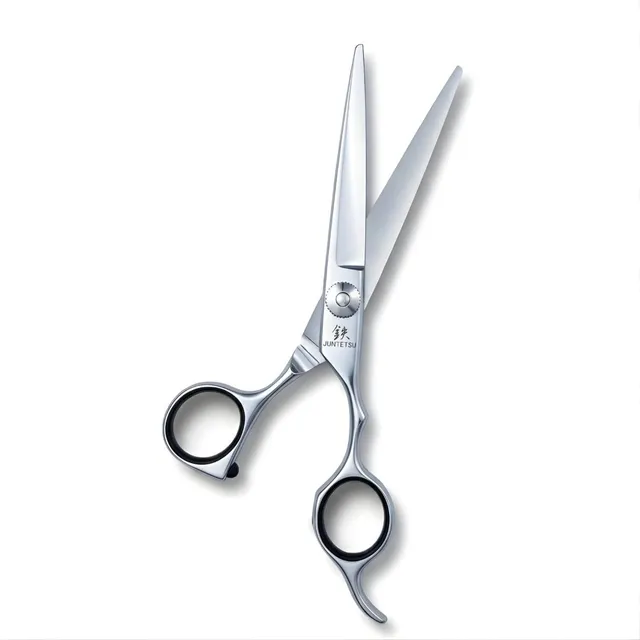
| Juntetsu Shears | A line built around higher-end models | Anyone who wants to choose carefully by specification and finish |
All three are independent brands, and Scissor Lab sells them as a stockist. To compare price ranges and sizes in a table, see “Mina, Ichiro and Juntetsu Compared”. How to read steel is covered in “Understanding Scissor Steel”.
Suggestions by use
Here are models from the Cutting Scissors Scissor Lab carries that are easy choices for each use. You can compare sizes and prices side by side in the comparison table further down this page.
For a first pair
- Ichiro Ergo Apprentice Cutting Scissors: 5.5 inch (convex) and 6.0 inch (micro-serrated), offset handle. A model for students and new stylists.
- Mina Sakura II Cutting Scissors: five sizes from 5.0 to 7.0 inch, offset handle and convex edge. A model where it is easy to choose a size that suits your hand.
For a first pair, starting from 5.5 to 6.0 inch, an offset handle and a convex edge gives you scissors that work well for both wet and dry cutting.
For salon work centred on base cutting
- Ichiro Offset Cutting Scissors: 5.0 to 7.0 inch, offset handle and convex edge.
- Juntetsu Cobalt Apex Cutting Scissors: 5.5 to 6.5 inch, offset handle and convex edge.
Base cutting covers a wide section in each cut, so around 6.0 inch is an easy length to work with.
For dry cutting and finishing details
- Juntetsu Night Cutting Scissors: a model with an offset handle and convex edge, available in 5.75 and 6.75 inch.
- Mina Classic II Cutting Scissors: semi-offset handle and micro-serrated edge. An edge that grips slippery dry hair well.
Dry cutting means placing the tip precisely, so a shorter 5.0 to 5.5 inch is an easy length to work with.
If you want a classic handle
- Ichiro Amethyst Cutting Scissors: classic handle and convex edge, 5.5 to 6.5 inch.
If you want to keep the hold you practised at school, starting your comparison with classic handles is one way to go.
For a longer second pair
- Ichiro Sword Barber Cutting Scissors: 6.0 to 7.0 inch, offset handle and convex edge.
This is adding a longer pair for short back and sides, scissor over comb or blunt cutting on long hair. How to choose a length for barbering is set out in “How to Choose Barber Scissors”.
How to think about a first and a second pair
For your first pair, choose a length and shape that covers all-round salon work. If you are torn between 5.5 and 6.0 inch, choose the shorter one if your everyday cutting involves a lot of detailed work, and the longer one if you do a lot of base cutting or long hair.
For your second pair, giving it a different role from the first makes it clear which one to reach for.
- Add a shorter 5.0 to 5.5 inch pair for finishing details and dry cutting
- Add a longer pair of 6.5 inch or more for blunt cutting and short back and sides
- Add Thinning Scissors for removing weight
If you are adding Thinning Scissors, see “How to Choose Thinning Scissors” as well. If you are left-handed, how to choose left-handed scissors is set out in “Scissors for Left-Handed Hairdressers”.
Before you order
Cutting Scissors are a tool where the feel in your hand matters. Before you order, it is worth checking these points.
- Check the size (in inches) and handle shape of the scissors you use now
- Check which hand you need (right-handed or left-handed)
- Check the sizes available and stock on the product page
For the terms that apply to your order, see the trade terms.
If you can’t decide on a size or handle shape, ask us through the contact form. If you include the model name and size of the scissors you use now, it is easier for us to compare.
Summary
- Deciding in the order size, handle, blade edge, budget makes choosing easier.
- For a first pair, the standard is 5.5 to 6.0 inch, an offset handle and a convex edge.
- Give a second pair a different role from the first: shorter, longer or thinning.
Browse every model in the “Cutting Scissors” list and filter by size and handle shape.
The models in this guide
| Model | Sizes | Handle | Edge | Hand | Price (tax-free) |
|---|---|---|---|---|---|
| Ichiro Ergo Apprentice Cutting Scissors | 5.5 / 6.0″ | Offset | – | Right-handed | ¥19,727 |
| Mina Sakura II Cutting Scissors | 5.0–7.0″ | Offset | Convex | Right-handed | ¥13,091 |
| Ichiro Offset Cutting Scissors | 5.0–7.0″ | Offset | Convex | Right-handed | ¥22,909 |
| Juntetsu Cobalt Apex Cutting Scissors | 5.5–6.5″ | Offset | Convex | Right-handed | ¥39,636 |
| Juntetsu Night Cutting Scissors | 5.75 / 6.75″ | Offset | Convex | Right-handed | ¥29,182 |
| Mina Classic II Cutting Scissors | 5.0–6.0″ | Semi-offset | Micro-serrated | Right-handed | ¥11,364 |
| Ichiro Amethyst Cutting Scissors | 5.5–6.5″ | Classic (even) | Convex | Right-handed | ¥24,545 |
| Ichiro Sword Barber Cutting Scissors | 6.0–7.0″ | Offset | Convex | Right-handed | ¥22,909 |
Questions and answers
Will more expensive scissors help me improve faster?
More expensive scissors are often models with more work put into the steel and finish, but that alone won't make you improve faster. What matters for improving is learning the correct hold with a size and handle shape that suit your hand. It is perfectly reasonable to choose a first pair that suits your hand within your budget, then be particular about the specification with a second pair once you know how you work.
Does the colour or coating change how they cut?
Colours and coatings are a difference in appearance. How scissors cut is decided mainly by size, blade edge, tension and the condition of the edge. Choose the colour you like once you have settled on the size and handle shape.
Should I choose a swivel handle?
A swivel thumb has a thumb ring that rotates, so you don't have to change the direction of your thumb when you hold the scissors at different angles. On the other hand, the way your thumb moves feels different from a standard handle. For a first pair, the easiest order is to start from an offset handle and compare swivels once you are used to your hold.