By purpose
Scissors for Left-Handed Hairdressers
For left-handed hairdressers and barbers, we recommend left-handed (lefty) scissors, built to be held in the left hand. If you use right-handed scissors in your left hand, your grip pushes the blades apart, and hair tends to fold between them.
Key points
- Left-handed scissors have the blade overlap and handle shape built to be held in the left hand.
- Using right-handed scissors in your left hand pushes the blades apart, so the cut ends are harder to keep even.
- Size is measured and handle shapes are chosen just as for right-handed scissors, and the basic approach is to have both Cutting and Thinning Scissors left-handed.
The difference between left-handed and right-handed scissors
Scissors are two blades held together by a pivot screw. In right-handed and left-handed scissors, the blades overlap in mirror image. The handle shape is also made for the hand that will hold the scissors.
Blade overlap and the direction of force
When you cut hair, the correct state is for the grip of your thumb and ring finger to press the two blades against each other. The blades stay in firm contact as they close, so the hair between them is cut cleanly.
Right-handed scissors are built so that the force goes in this direction when held in the right hand. Left-handed scissors are the reverse: they are built so that the blades press against each other when held in the left hand.
Handle direction
On offset and crane handles, the thumb-side and ring-finger-side handles (shanks) differ in length and angle. If you hold a right-handed handle in your left hand, the thumb ring sits in the wrong place, so it is hard to take the correct hold. Left-handed handles are made so that the thumb ring falls naturally into place in the left hand.
What happens if you use right-handed scissors in your left hand
If you hold right-handed scissors in your left hand, your grip pulls the two blades apart. As a result, these things tend to happen.
- A gap opens between the blades, and hair folds between them instead of being cut
- Hair escapes towards the tip, and the cut ends are uneven
- You squeeze harder to make them cut, and opening and closing becomes awkward
- You end up turning your body as you cut to see the line
Tightening the tension can make them seem to cut for a while, but it doesn’t change the way they are built, with force going in the direction that opens the blades. If you are left-handed and will be training for a long time, we recommend choosing left-handed scissors from the start.
What “left-handed” means on a listing
There are broadly two approaches to scissors for left-handed users.
| Type | How the blades are built | Handle |
|---|---|---|
| Left-handed (fully lefty) | Built in mirror image, to be held in the left hand | Left-handed shape |
| Left-handed handle only | Built the same way as right-handed scissors | Left-handed shape |
Scissors with only a left-handed handle fit the left hand in shape, but the blades are built the same way as right-handed scissors. Before you buy, check that both the blades and the handle are left-handed. If you can’t tell from the product page alone, ask us through the contact form.
Handle shapes for left-handed scissors
Handle shapes are chosen in the same way for left-handed scissors as for right-handed ones.
- Offset handle: the thumb-side handle (shank) is shorter than the ring-finger side. Most of the left-handed models we carry are offset.
- Classic (symmetrical) handle: the thumb-side and ring-finger-side handles are almost the same length. It is often used to practise the basic hold.
- Crane handle: an offset handle with the ring-finger-side handle angled downwards.
Offset and crane handles are made in left-handed versions so that the thumb ring is in the correct place when held in the left hand. If you hold a right-handed offset in your left hand, the thumb ring is in the wrong place. The differences between handles are covered in detail in “Scissor Handle Types Explained”.
Choosing a size
Left-handed scissors are sized and measured in the same way as right-handed ones. Size is the length in inches from the blade tip to the end of the longest handle (not counting the finger rest).
Lay the closed scissors on your left palm: if the blade is roughly the same length as your middle finger, the size is a good starting point for your hand. Here is how it combines with the cutting you do most.
| Cutting you do most | Suggested length |
|---|---|
| Detailed work, dry cutting | 5.0 to 5.5 inch |
| General salon work | 5.5 to 6.0 inch |
| Blunt cutting, long hair | 6.0 to 6.5 inch |
Left-handed versions of some models come in fewer sizes than right-handed ones. Even within the same model, check which sizes are available left-handed in the size options on the product page. How to think about size is set out in “How to Choose Your Scissor Size”.
If your school specifies right-handed scissors
Some hairdressing schools specify the scissors used in class. If you are left-handed, it is worth checking these points with your tutor or the school before you enrol or buy.
- Whether you may use left-handed scissors
- Whether the specified model comes in a left-handed version
- Whether you are allowed to cut left-handed in practical classes
Even if you are told to use right-handed scissors, explaining your situation and asking may lead the school to find a solution. For orders placed by a school as a group, contact us through the wholesale page. Choosing scissors as a hairdressing student is also covered in “Scissors for Hairdressing Students and New Stylists”.
Left-handed Thinning Scissors
Thinning Scissors also come in left-handed versions. If your Cutting Scissors are left-handed, the basic approach is to have left-handed Thinning Scissors too.
If you use right-handed Thinning Scissors in your left hand, the force pushes the blades apart just as with Cutting Scissors, and hair tends to fold between the teeth. With Thinning Scissors, how much each cut takes shows strongly in the finish, so it is especially important that the blades meet firmly.
Tooth count and thinning rate are chosen in the same way as for right-handed scissors. See “How to Choose Thinning Scissors”.
Left-handed models
The left-handed models Scissor Lab carries include models made only in left-handed versions, and models available in both right-handed and left-handed versions.
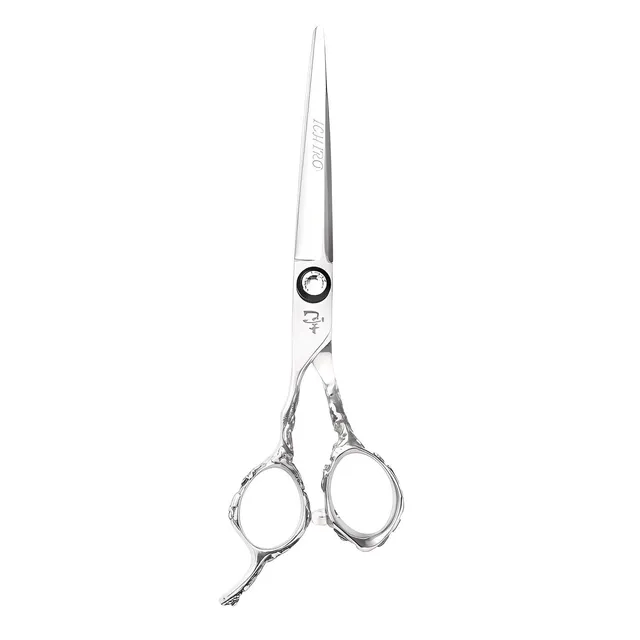
- Ichiro Rose Lefty Left-Handed Cutting Scissors: 6.0 inch, a left-handed model with an offset handle and convex edge.
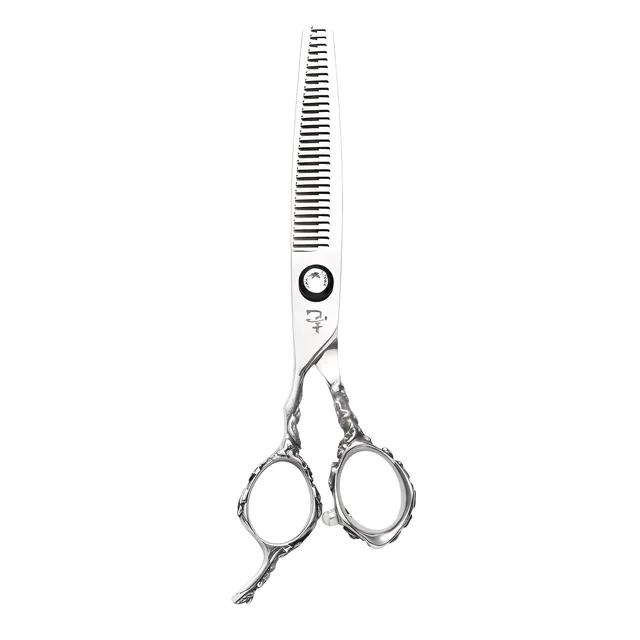
- Ichiro Rose Lefty Left-Handed Thinning Scissors: 6.0 inch, a left-handed model with 30 teeth.
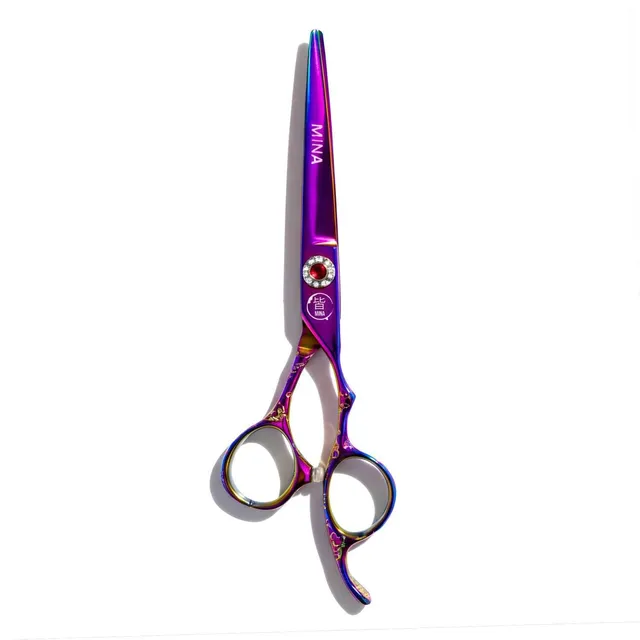
- Mina Rainbow II Cutting Scissors: available right-handed or left-handed.
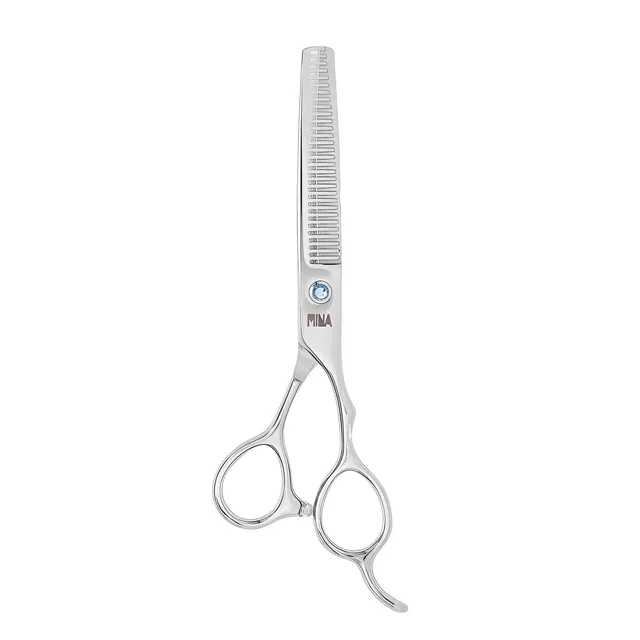
- Mina Umi Thinning Scissors: 6.0 inch, 30 teeth. Available right-handed or left-handed.
- Ichiro Rose Gold Cutting Scissors: available right-handed or left-handed.
If you want Cutting and Thinning Scissors from the same model, there are also sets available left-handed under “Scissor sets”. How to choose a set is covered in “How to Choose a Scissor Set”.
Learning from right-handed seniors and tutors
In salons and schools, you will often learn from right-handed senior stylists and tutors. If you are left-handed, these approaches make training easier.
- Watch as if in a mirror: picture your senior’s hand movements reversed, as if reflected in a mirror.
- Check the cutting order: you may cut in the opposite direction from a right-handed stylist. Check the sectioning order and the direction to work in beforehand.
- Talk about where to stand: which side of the client is easier to cut from depends on your dominant hand.
If you tell them at the start that you use left-handed scissors, it is easier for whoever is teaching you to think about how to explain.
Caring for and resharpening left-handed scissors
Daily care for left-handed scissors is the same as for right-handed ones. After use, wipe off clippings and water, put one drop of oil on the pivot and store them in a case. Checking the tension works the same way too.
When you send them for resharpening, always say that they are left-handed. Because the blades are built in reverse, sharpening and adjustment may also go in the opposite direction from right-handed scissors. What happens when you send scissors for sharpening is set out in “When to Get Your Scissors Sharpened”.
Checklist for choosing
- Are both the blades and the handle left-handed?
- Is the size that suits your hand available left-handed?
- Do your Cutting and Thinning Scissors have matching handle shapes?
- If you will use them at school, have you checked that left-handed scissors are allowed?
Summary
- If you are left-handed, we recommend scissors whose blades and handle are both left-handed.
- Using right-handed scissors in your left hand pushes the blades apart, so the cut ends are harder to keep even.
- Size and handle shape are chosen just as for right-handed scissors, and both Cutting and Thinning Scissors should be left-handed.
Left-handed models are listed under “Left-handed models”.
The models in this guide
| Model | Sizes | Handle | Edge | Hand | Price (tax-free) |
|---|---|---|---|---|---|
| Ichiro Rose Lefty Left-Handed Cutting Scissors | 6.0″ | Offset | Convex | Left-handed | ¥20,818 |
| Ichiro Rose Lefty Left-Handed Thinning Scissors | 6.0″ | Offset | 30 Teeth | Left-handed | ¥20,818 |
| Mina Rainbow II Cutting Scissors | 4.5–7.0″ | Offset | Convex | Right- and left-handed | ¥13,091 |
| Mina Umi Thinning Scissors | 6.0″ | Offset | 30 Teeth | Right- and left-handed | ¥11,364 |
| Ichiro Rose Gold Cutting Scissors | 5.0–6.5″ | Offset | Convex | Right- and left-handed | ¥22,909 |
| Ichiro Matte Black Cutting Scissors | 5.0–7.0″ | Offset | Convex | Right- and left-handed | ¥22,909 |
| Mina Jay II Cutting Scissors | 5.0–7.0″ | Offset | Convex | Right- and left-handed | ¥11,364 |
| Ichiro Rose Gold Thinning Scissors | 6.0″ | Offset | 30 Teeth | Right- and left-handed | ¥22,909 |