Choosing scissors
Scissors for Dry Cutting and Wet Cutting
For dry cutting, shorter scissors of 5.0 to 5.5 inch that let you move the tip precisely are easiest to work with, and for wet cutting, slightly longer scissors of 5.5 to 6.0 inch. Wet and dry hair meet the blade differently, so choose the length, blade edge and tension for the cutting you do.
Key points
- Wet cutting makes it easy to set length and the base, and slightly longer scissors of 5.5 to 6.0 inch work well for it.
- Dry cutting means refining while watching how the ends move, so a shorter 5.0 to 5.5 inch that lets you move the tip precisely suits it.
- If one pair does both, the standard is around 5.5 inch, a convex edge and an offset handle.
How the two kinds of cutting differ
Wet cutting is cutting with the hair damp.
- The hair falls straight down, so length is easier to keep level.
- It is often used for base cutting (building the foundation) and blunt cutting.
- Wet hair clumps together in sections, so each cut tends to take more hair.
- As it dries, hair shrinks and its natural movement shows, so you cut allowing for the finished length.
Dry cutting is cutting with the hair dry.
- You can refine while you can see the hair’s natural movement and how the ends move.
- It is used to refine weight and texture at the ends while you watch the finish.
- Dry hair slips easily on the blade, and the condition of the edge shows more in the finish.
- You cut many fine sections, so you open and close the scissors many more times.
In real salon work, a common combination is to build the base wet, then dry the hair and finish dry.
Scissors for wet cutting
- Length: 5.5 to 6.0 inch as a guide. The longer blade cuts a wide section level in one go. For blunt cutting on long hair, 6.0 to 6.5 inch is also popular.
- Blade edge: a convex edge is the standard. Its smooth edge cuts through a gathered section.
- Tension: set slightly firm, the blades stay stable even on wet, slippery hair.
- Handle: you cut in the same hold for long periods, so choosing the handle shape you are used to makes switching to and from your other scissors feel more natural.
After cutting wet hair, wipe off the water promptly. Water left around the pivot can cause rust and make the action heavy.
Scissors for dry cutting
- Length: 5.0 to 5.5 inch as a guide. The shorter the scissors, the more precisely you can place the tip.
- Blade edge: convex or micro-serrated. A micro-serrated edge grips slippery, dry hair well.
- Tension: set to standard. Too tight, and small opening and closing movements become harder.
- Weight: you open and close in small movements over and over, so a model that feels light in the hand is easier to work with.
In dry cutting, the condition of the edge shows more in the finish. If dry hair alone has started to escape, that is a sign to consider resharpening.
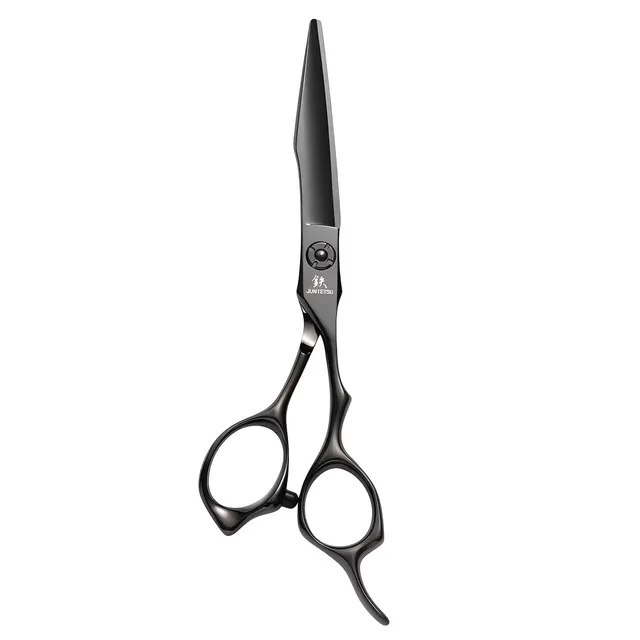
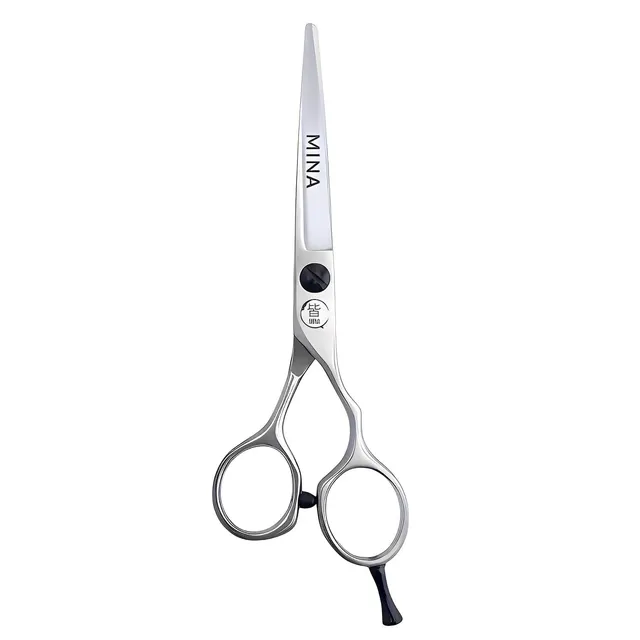
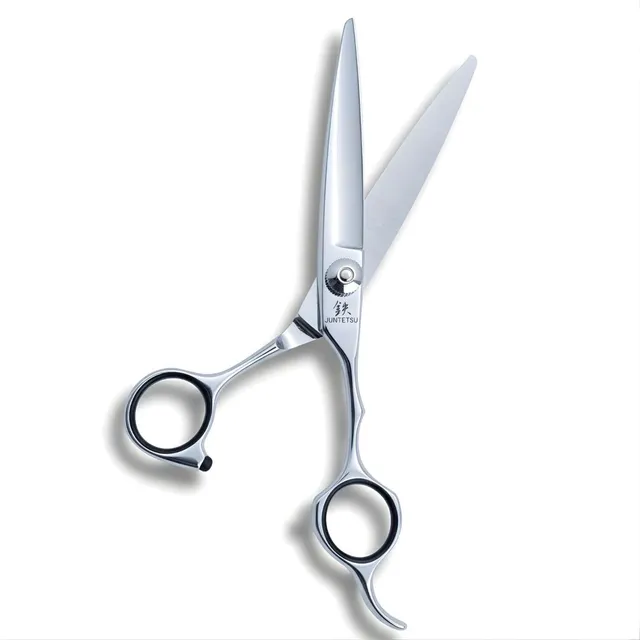
Among the models we carry, the Juntetsu Night Cutting Scissors, available in 5.75 and 6.75 inch, and the micro-serrated Mina Classic II Cutting Scissors are good models to compare.
For slide cutting
For slide cutting, gliding over the hair without closing the blades fully, choose a convex edge with a smooth edge. Micro-serrated and bevel edges catch on the hair, so they are not suited to it.
If the tension is too firm, the blades feel heavy and gliding becomes harder. Adjust it to around medium. Slide cutting is done both wet and dry, but dry hair slips on the blade more easily, so the condition of the edge matters even more.
Models designed for slide cutting are listed under “Slide scissors”.
Doing both with one pair
If one pair does both wet and dry cutting, this combination is the standard.
- Length: around 5.5 inch
- Blade edge: convex
- Handle: offset
- Tension: standard
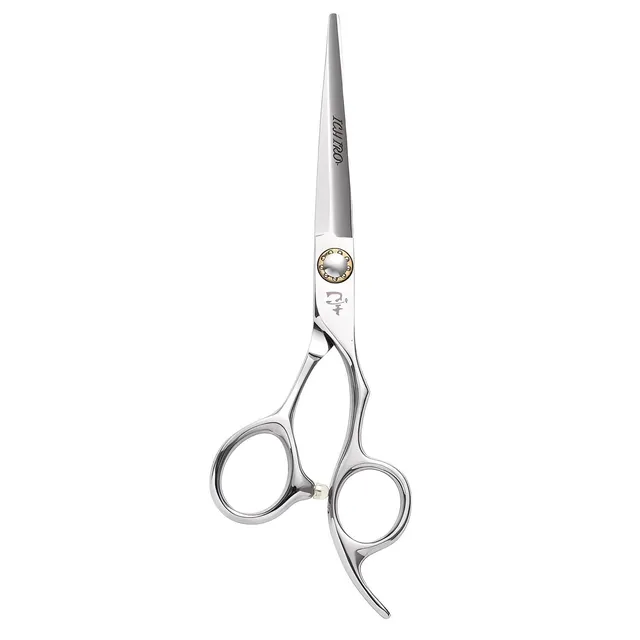
For example, the Ichiro Offset Cutting Scissors are an offset, convex model available from 5.0 to 7.0 inch.
Once you are used to them, adding a shorter pair of around 5.0 inch for dry cutting makes it clear which pair to reach for. If many of your clients have long hair, you can also add a pair of 6.0 inch or more for wet cutting. How to think about a second pair is also covered in “How to Choose Your Scissor Size”.
What to check when adding a pair for dry cutting
When adding a second pair for dry cutting, compare it with your first pair and check these points.
- Is it shorter than your first pair (5.0 to 5.5 inch)?
- Is the handle shape the same as your first pair, or is the difference in hold small?
- Does the blade edge suit the hair you cut most?
Side by side
| Cutting | Suggested length | Blade edge | Tension | Handle |
|---|---|---|---|---|
| Wet cutting | 5.5 to 6.0 inch | Convex | Slightly firm | Offset, crane |
| Dry cutting | 5.0 to 5.5 inch | Convex, micro-serrated | Standard | Offset |
| Slide cutting | 5.5 to 6.0 inch | Convex | Medium | Offset |
| Blunt cutting | 5.5 to 6.5 inch | Convex, bevel | Slightly firm | Classic, offset |
The differences between blade edges are covered in detail in “Scissor Blade Types Explained”.
Points to watch in dry cutting
Dry cutting involves a lot of precise work with the tip. Alongside choosing the right scissors, watching these points helps keep the finish even.
- Take fine sections: dry hair spreads easily, so taking finer sections in each cut stops hair escaping from between the blades.
- Use the tip and the middle of the blade for different jobs: fine adjustments with the tip, larger amounts with the middle of the blade.
- Cut while watching the natural movement: change the angle of the blades to follow the movement and fall you can see when the hair is dry.
- Check the condition of the blades often: if dry hair alone has started to escape, check the tension and the condition of the edge.
Differences by hair type
Hair type also changes how the scissors meet the hair.
| Hair type | What tends to happen | What to look for in scissors |
|---|---|---|
| Fine, soft hair | Slips on the blade and escapes at the tip | Keep the edge in good condition, consider micro-serrated |
| Thick, coarse hair | Pushes the blades apart if you cut a lot at once | Set the tension right and take fine sections |
| Curly or wavy hair | Length differs between wet and dry | Leave it longer wet and refine it dry |
| Damaged hair | The ends catch easily | A smooth edge, and clean inner faces on the blades |
Different care
After wet cutting, water tends to stay on the scissors. Water left around the pivot or on the inner faces of the blades can cause rust and make the action heavy, so wipe them promptly when you finish and oil them.
After dry cutting, fine clippings tend to stay on the inner faces of the blades. Open the blades wide and wipe the inner faces too. After cutting hair with styling product in it, wipe off any residue left on the blades as well. Daily care is set out in “How to Care for Your Scissors”.
Summary
- As a guide, 5.5 to 6.0 inch for wet cutting and 5.0 to 5.5 inch for dry cutting.
- For dry cutting and slippery hair, choose a convex or micro-serrated edge.
- If one pair does both, the standard is around 5.5 inch, a convex edge and an offset handle.
Compare every model in the “Cutting Scissors” list and filter by size and handle shape.