Care and sharpening
How to Choose a Scissor Case
Choose the form of scissor case for the way you work, from cases and holsters, pouches and covers, and as a guide pick one that holds one or two more pairs than you own now. Also check that the blades can't knock against each other inside, and that the material is easy to care for.
Key points
- As a guide, choose a case or holster if you take scissors in and out in the salon, a pouch if you carry them a lot, and a cover to protect a single pair.
- For capacity, take the number of pairs you own now and add the one or two you are likely to add.
- Check that each pair has its own pocket so the blades don't touch, and that the material is easy to wipe clean.
Why you need a scissor case
The edges of professional scissors are finished very thin. If they knock against other scissors or metal tools in a drawer or bag, the edge can chip or the blade can bend slightly. Small damage like this shows up as a change in how they cut, and in how often they need resharpening.
A scissor case has three main jobs.
- Protecting the blades: each pair sits on its own, so the edges don’t touch each other or other tools.
- Carrying: you can carry scissors safely between the salon and home, to courses and seminars, or to clients for mobile work.
- Organising: Cutting Scissors, Thinning Scissors and pairs of different lengths each have a set place, so you can take them out straight away.
How to use a case as part of your daily care is also covered in “How to Care for Your Scissors”.
Cases, holsters, pouches and covers compared
Scissor holders go by different names depending on their form. Choose for where you will use them.
| Form | What it is | Suited to |
|---|---|---|
| Case | Several pockets that hold scissors upright or side by side | Storing and taking scissors in and out in the salon |
| Holster | Attaches to your waist or belt and is worn while you work | Anyone who switches scissors a lot while cutting |
| Pouch | Folds in two or three and closes around the scissors | Carrying in a bag |
| Cover | A simple sleeve for a single pair | Storing or carrying one pair on its own |
Some products can be used as both a case and a holster. Check the photos and description on the product page to see whether one attaches to a waist or belt. In Scissor Lab product names, holders for several pairs are called “Scissor Case”, folding holders “Scissor Pouch”, and holders for one pair “Scissor Cover”.
How many pairs should it hold?
The most common question when choosing a case is how many pairs it should hold. As a guide, take the number of pairs you own now and add the one or two you are likely to add.
| Scissors you own | Suggested capacity |
|---|---|
| One pair of Cutting Scissors | 1 to 2 pairs |
| One pair each of Cutting and Thinning Scissors | 2 to 4 pairs |
| Two Cutting Scissors of different lengths plus 1 or 2 Thinning Scissors | 4 to 5 pairs |
| Many: cutting, thinning, slide scissors, razors and so on | 6 to 8 pairs |
Hairdressing students and new stylists often start with two pairs, cutting and thinning, then add a second pair of Cutting Scissors or texturising scissors once they start working in a salon. Choosing a case for about four pairs means you are less likely to need a new one later. If you are buying scissors as a set, see “How to Choose a Scissor Set” as well.
Check the pocket size too
Even at the same capacity, pocket length and width vary between cases. If you want to fit long scissors of around 7.0 inch, or scissors with large finger rings such as swivel handles, check the photos on the product page for the depth of the pockets and the size of the opening where the handles stick out.
Carrying and protecting the blades
When carrying scissors, these points help protect the edges.
- Close the blades before putting them away: if they go in open, the edge hits the rim of the pocket.
- Point all the tips the same way: your fingers are less likely to touch an edge when you take them out.
- One pair per pocket: if two pairs share a pocket, the blades knock together.
- Close the pouch before it goes in your bag: left open, scissors can slip out inside the bag.
When you post scissors for resharpening, putting them in a case or cover before packing them is a sensible precaution. How to send them by post is covered in “When to Get Your Scissors Sharpened”.
Materials compared
The scissor cases Scissor Lab carries come in three main materials: felt, leather and vegan leather.
- Felt: soft and light. It wraps gently around the scissors. It absorbs moisture easily, so wipe wet scissors before putting them in.
- Leather: firm, so the pockets keep their shape. With use it softens to your hand, and its colour and character change little by little.
- Vegan leather: a synthetic material made without animal-derived ingredients. Its surface is easy to wipe clean.
Whatever the material, putting scissors away with water or chemicals still on them traps moisture inside the case. Wipe the blades and let them dry before putting them away.
Choosing by how you work
| How you work | What to choose |
|---|---|
| You use them in the salon every day and leave them there after work | A case for several pairs |
| You travel between the salon and home every day | A pouch that closes for carrying, or a case |
| You carry all your tools to mobile work or courses | A pouch with spare capacity |
| You want to wear your scissors while cutting | A holster that attaches to your waist or belt |
| You want to store a spare pair, or one being resharpened | A cover for one pair |
Checklist before you choose
Check these points before choosing a case, and you are less likely to find afterwards that your scissors don’t fit or that it is awkward to use.
- Your longest scissors: will scissors of around 7.0 inch fit in the pockets?
- Handle shape: will swivel handles, or scissors with a large finger rest, pass through the opening of the pocket?
- How it closes: if you carry it a lot, does it close so that the scissors can’t fall out?
- Where it will go: does it fit the space, whether a salon trolley, a drawer or your bag?
- Other tools: do you want to keep combs, clips or a styling razor in it too?
If you carry a styling razor and combs as well, choosing a case or pouch with spare capacity keeps all your tools together.
Caring for your case
A scissor case is nicer to use if you care for it now and then too.
- Shake out the clippings: turn it upside down and gently shake out clippings that have collected in the pockets.
- Wipe with a dry cloth: wipe the surface of leather and vegan leather with a soft, dry cloth.
- Dry it thoroughly: if it gets wet, dry it somewhere airy, out of direct sunlight.
- Watch for oil: if you put too much oil on your scissors, it soaks into the case. After oiling, wipe off the excess before putting them away.
Caring for the scissors themselves is covered in “How to Care for Your Scissors”.
Summary
- Choose a form for the way you work: case, holster, pouch or cover.
- As a guide for capacity, take the number of pairs you own now and add one or two.
- Wipe and dry the blades, then put them away closed, one pair per pocket.
Scissor cases are listed under “Cases and accessories”.
The models in this guide
| Model | Sizes | Handle | Edge | Hand | Price (tax-free) |
|---|---|---|---|---|---|
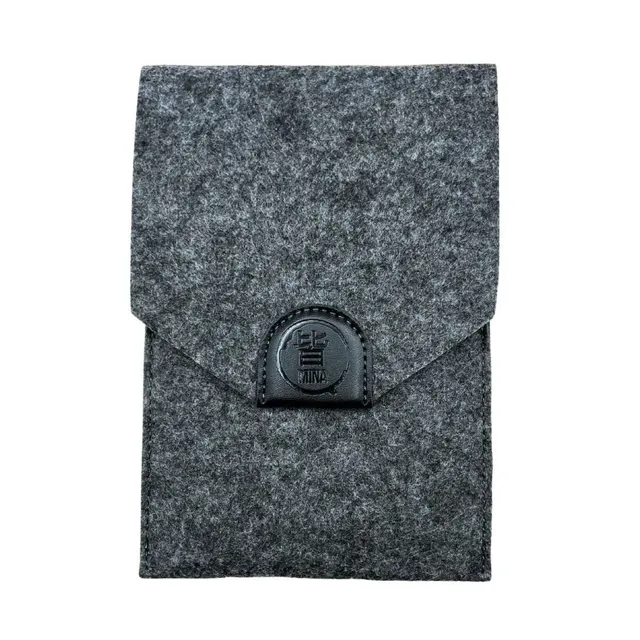
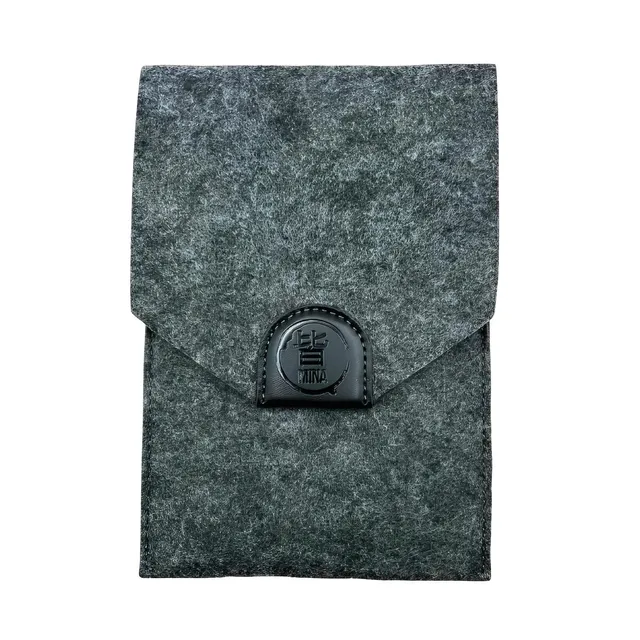
| Mina Felt Scissor Case (4 Scissors) | – | – | – | – | ¥4,182 |
| Mina Felt Scissor Case (2 Scissors) | – | – | – | – | ¥3,000 |
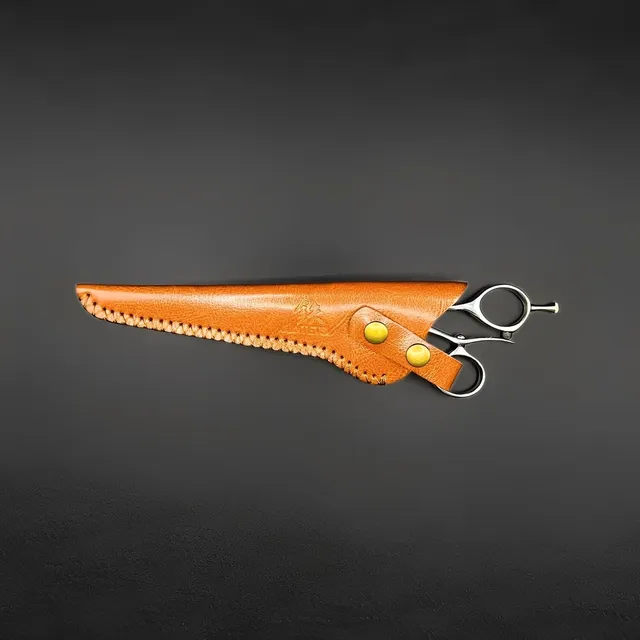
| Juntetsu Premium Leather Scissor Cover | – | – | – | – | ¥3,091 |
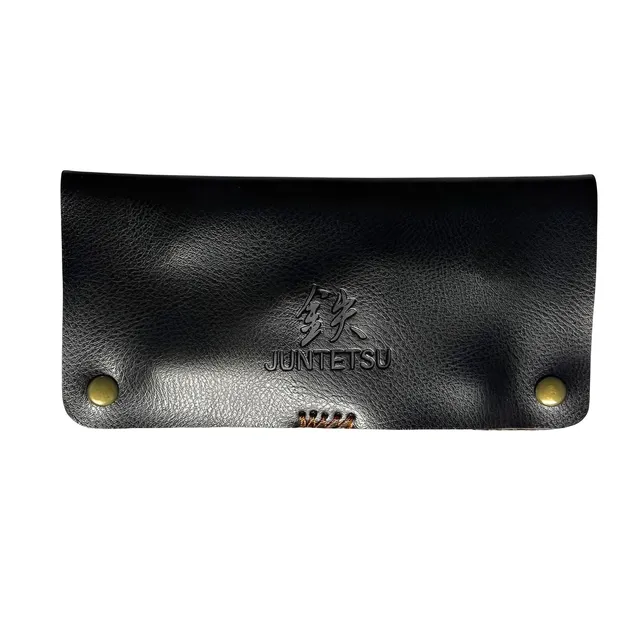
| Juntetsu Artisan Leather Scissor Case | – | – | – | – | ¥5,091 |
| Juntetsu Heritage Laced Leather Scissor Pouch | – | – | – | – | ¥10,364 |
| Juntetsu Black Belt Leather Scissor Case | – | – | – | – | ¥10,364 |
| Juntetsu Eco-Pro Tri-Fold Vegan Leather Scissor Pouch | – | – | – | – | ¥10,364 |
| Juntetsu Sentinel Fold Leather Scissor Pouch | – | – | – | – | ¥10,364 |